Investing in Right of Way Improvements
Why Edgewater Needs Additional Investment in Right-of-Way Infrastructure
Edgewater is a vibrant, walkable community that continues to evolve. As more community members, businesses and visitors use our streets and sidewalks, Edgewater faces increasing demands to maintain and improve public infrastructure. Many of our sidewalks, curb ramps, crossings and bicycle facilities were built decades ago and no longer meet current accessibility, safety and mobility standards.
A proposed 0.5% sales tax increase would provide dedicated funding to improve the public right-of-way, creating safer and more accessible streets for everyone who lives, works and visits Edgewater.
What Is Right-of-Way Infrastructure?
The public right-of-way includes the spaces that allow people to move safely throughout the community, including:
- Sidewalks
- Americans with Disabilities Act (ADA) curb ramps
- Crosswalks
- Bicycle lanes and facilities
- Street landscaping
- Traffic safety improvements
- Stormwater infrastructure associated with streets
These improvements help create a transportation network that works for people of all ages and abilities.
Why Improvements Are Needed
Accessibility
Many areas throughout Edgewater were developed before modern accessibility standards existed. As a result:
- Existing ramps may not meet current accessibility requirements.
- Sidewalks can be too narrow for wheelchairs, mobility devices or strollers.
- Uneven surfaces create barriers for people with disabilities and older adults.
Improving accessibility allows all Community Members to participate fully in community life.
Safety
Safe streets benefit everyone. Infrastructure improvements can:
- Reduce pedestrian and bicycle crashes.
- Improve visibility at intersections.
- Create safer routes to schools, parks, businesses and transit stops.
- Separate bicycle traffic from vehicle traffic where appropriate.
- Make walking safer for children and older adults.
Supporting Aging in Place
As Edgewater's population ages, safe and accessible transportation options become increasingly important. Improved sidewalks, crossings and ADA infrastructure help older adults:
- Remain independent longer.
- Access services and businesses safely.
- Stay active and connected within the community.
Encouraging Healthy Transportation Choices
Many Community Members choose to walk or bike for transportation, recreation and exercise. Expanded pedestrian and bicycle infrastructure can:
- Increase transportation options.
- Reduce traffic congestion.
- Improve public health.
- Reduce vehicle emissions.
How to Pay for Improvements
Edgewater voters will consider a 0.5% sales tax increase in November. The measure is estimated to generate approximately $1.2 million in 2027, with the revenue dedicated solely to improving accessibility and mobility throughout Edgewater. The funding could be used for sidewalks, Americans with Disabilities Act (ADA) improvements, bike lanes, streets, alleys, streetscaping and other mobility improvements. One significant change would be providing the City with resources to reduce or eliminate the current obligation of individual property owners to construct and repair sidewalks adjacent to their properties. A 0.5% sales tax equals 50 cents on a $100 taxable purchase. Current estimates show a need of approximately $36 Million over the next 15-20 years.
Why Sales Tax Is Being Considered
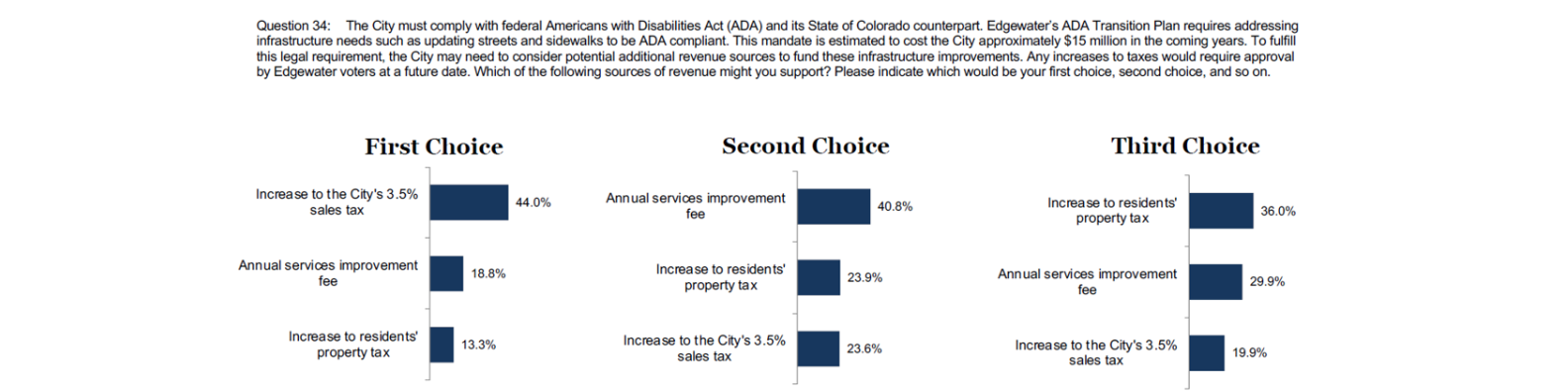
The referred sales tax would provide a dedicated revenue source for the accessibility and mobility improvements identified in the ballot measure. Sales tax is paid by both Edgewater residents and people who visit Edgewater and make taxable purchases. Ultimately, voters will decide whether a 0.5% sales tax is the appropriate way to fund these improvements. According to the 2024 Community Survey, community members identified a sales tax increase as their preferred method of funding sidewalk and street improvements. A permanent sales tax increase would provide on-going funding towards those improvements over time.
Capturing Revenue From Visitors
Unlike property taxes, sales taxes are paid not only by residents but also by:
- Visitors
- Commuters
- Shoppers from surrounding communities
This allows the cost of improvements to be shared among many users of Edgewater's infrastructure.
Providing a Dedicated Funding Source
Infrastructure projects often require substantial upfront investment. A dedicated sales tax can:
- Create a predictable revenue stream.
- Allow the city to plan long-term projects.
- Help secure grants by providing local matching funds.
- Accelerate construction of needed improvements.
Addressing Existing Funding Gaps
Current funding sources are often insufficient to address:
- Aging infrastructure
- ADA compliance requirements
- Increased maintenance costs
- Growing transportation demands
Without additional revenue, many projects may be delayed for years.
What Could Be Accomplished
Potential investments could include:
ADA Accessibility Improvements
- Replacement of non-compliant ramps
- Sidewalk repairs
- Accessible pedestrian crossings
Sidewalk Expansion
- Wider sidewalks in commercial areas
Bicycle Infrastructure
- Protected bike lanes
- Neighborhood bikeways
- Improved bicycle crossings
Safer Intersections
- Enhanced crosswalks
- Traffic calming measures
What Happens If Improvements Are Delayed?
Without additional funding:
- ADA deficiencies may remain unaddressed.
- Construction costs will continue to increase.
- Safety improvements may be postponed.
- Opportunities to leverage grant funding may be lost.
- Infrastructure conditions may worsen, resulting in more costly repairs later.
- Property Owners may be required to make improvements to sidewalks and right of ways at their own expense.
Addressing needs proactively is often significantly less expensive than waiting until facilities fail or require complete reconstruction.
-
2024 Community Survey
Share 2024 Community Survey on Facebook Share 2024 Community Survey on X (formerly Twitter) Share 2024 Community Survey on Linkedin Email 2024 Community Survey linkBelow is information taken from the 2024 Community Survey on funding American with Disabilities Act (ADA).