

Late in the evening on November 17, 2025, staff discovered a leak along Eaton Street. Because it wasn’t causing road damage and wasn’t threatening property, the team decided to let the line run overnight. The goal was simple: avoid shutting off water to dozens of apartments during the evening when families were home and relying on it.
By early Monday morning, the situation had changed. The leak had grown, water was now flowing across the pavement, and the pressure loss meant residents were already feeling the effects. To safely make repairs and prevent further damage, the water had to be turned off.
Below is a look at what happened under the street, why this became an emergency, and how the repair was completed.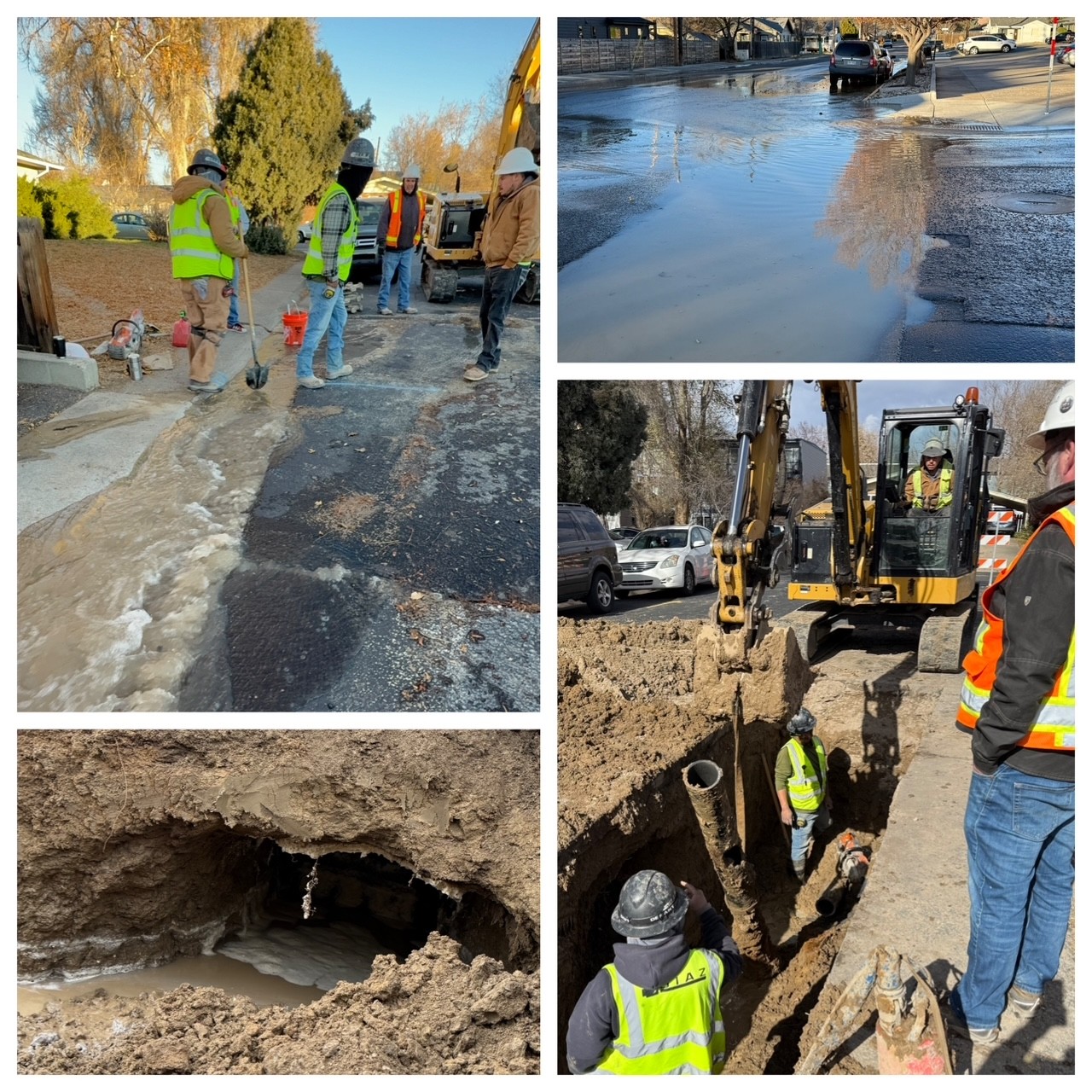
What We Found Under Eaton Street
Once the pavement was removed, the crew uncovered a ruptured section of pipe sitting near a large underground cavity. Water had washed out the soil nearby, creating a hollow void.
Why Emergency Repairs Feel So Chaotic
If this had been a scheduled replacement, we could have picked a time that avoided morning routines, showers, breakfast, school prep, and getting ready for work. Residents would have received advance notice and detours could have been set up early.
Emergency repairs don’t offer that flexibility. Once the leak expanded, valves had to be shut immediately and the water outage happened on the spot. The street also had to be closed to through traffic for the safety of crews and drivers.
This is exactly why this type of break causes so much disruption. Even with good intentions the night before, the break escalated faster than expected and became a full emergency by sunrise.
How the Repair Was Made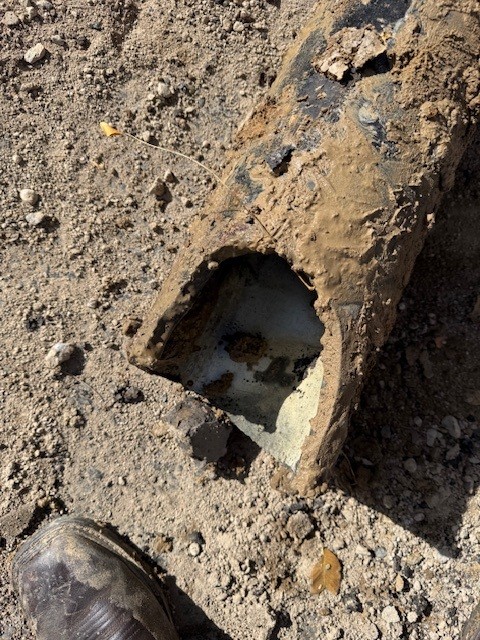 After shutting down service to the apartments and nearby homes, crews excavated to expose the failed section. The damaged pipe was removed, a new section of pipe was installed, and the line was carefully brought back into service.
Because the break created such a large void, the trench needed structural support. Flow fill was chosen to stabilize the area because it fills irregular spaces more effectively than standard backfill materials.
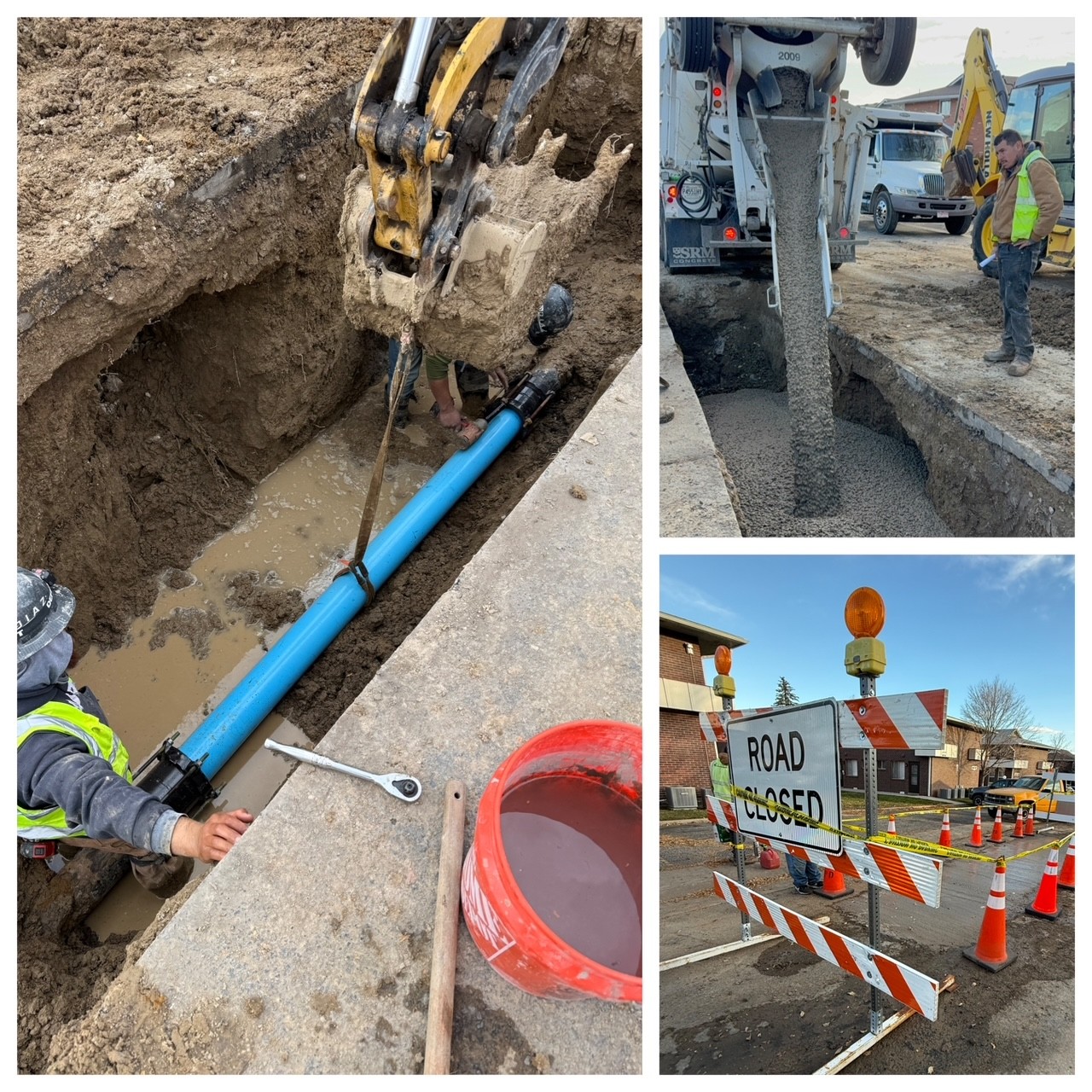
Restoring the Road and What Comes Next
Once the broken section of water main was replaced, the trench was backfilled, compacted and stabilized so the street could reopen safely. Permanent paving will be completed as the weather allows.
Although this repair is complete, it serves as another reminder that sections of older cast-iron pipe are nearing the end of their useful life. Cast iron is no longer used in new systems because it becomes brittle with age. Replacing these lines through planned capital projects reduces the number of emergencies we see, shortens outages and keeps streets from being disrupted multiple times for unplanned digs.
Thank You, Residents!
We know this outage happened at one of the busiest times of day and appreciate the patience shown by the residents of Eaton Street. Emergency repairs cannot be scheduled around people’s routines and they take as long as the excavation and replacement require. In this case, water had to be off for about 7.5 hours, and the street was closed to through traffic while crews worked to expose the pipe, remove the failed section, install new PVC, and stabilize the trench.
With planned replacements, a new pipe can be installed next to the old one, so outages are much shorter (a few hours or less) and scheduled outside the busiest times of the day. That is one of the benefits of capital investment in our water system.

Thank you for your contribution!
Help us reach out to more people in the community
Share this with family and friends