

When the Road Sinks: Why Edgewater Is Considering a Stormwater Fee
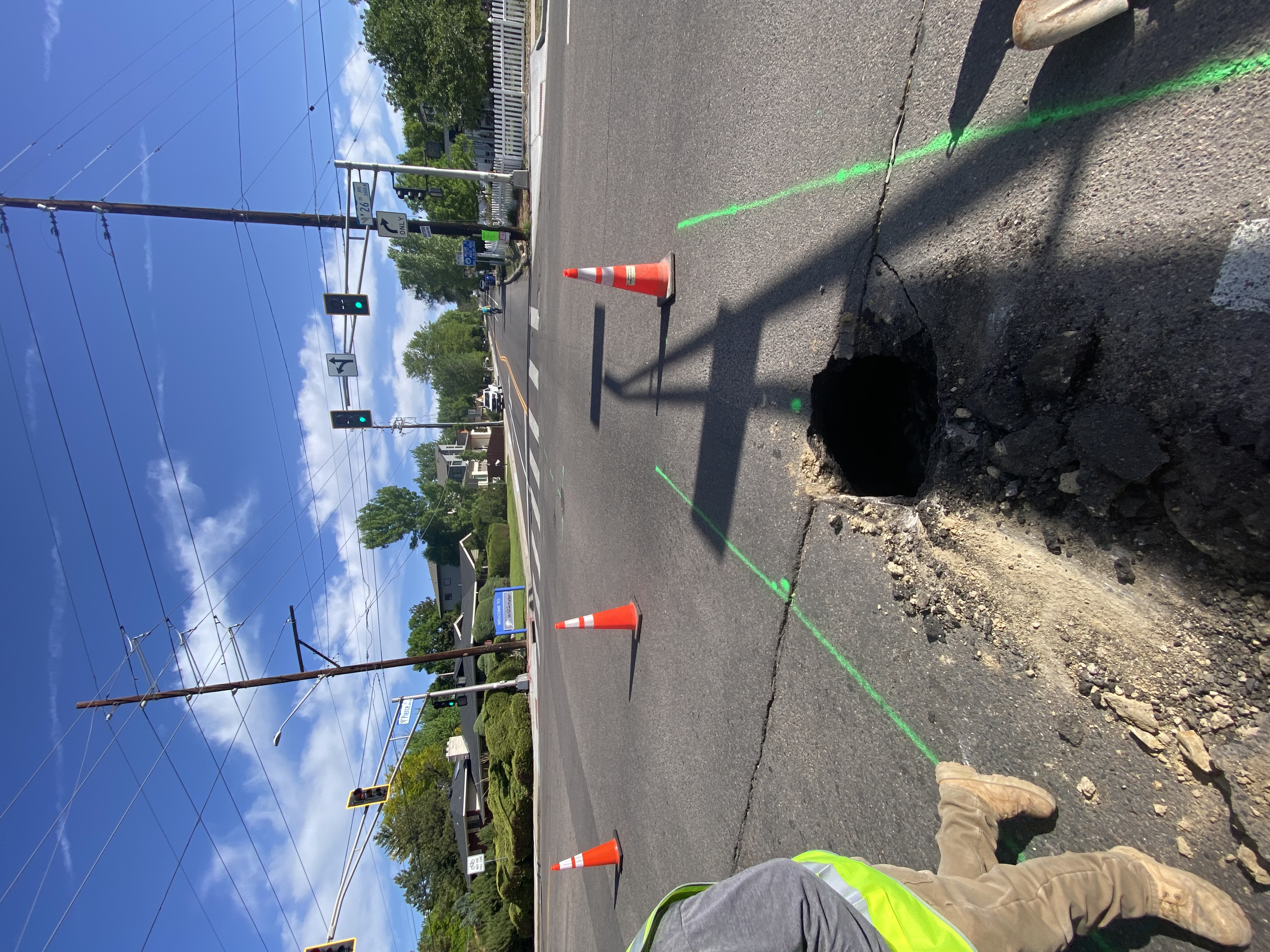 Just before a long Memorial Day weekend, Edgewater Public Works crews were called to investigate a report of a soft spot forming in the roadway at W. 26th Avenue and Pierce Street. By 9 a.m., staff confirmed that part of the asphalt had begun to sink, creating a hole at the surface. The area was immediately barricaded for safety, and Edgewater’s contractor was called.
After confirming all utilities were marked and that no water or gas lines were in the area, excavation began around noon. What they found was a 48-inch storm sewer pipe that had separated at a joint several feet below the surface. Over time, small amounts of water had leaked through the gap, washing away soil and weakening the ground above until the pavement finally gave way.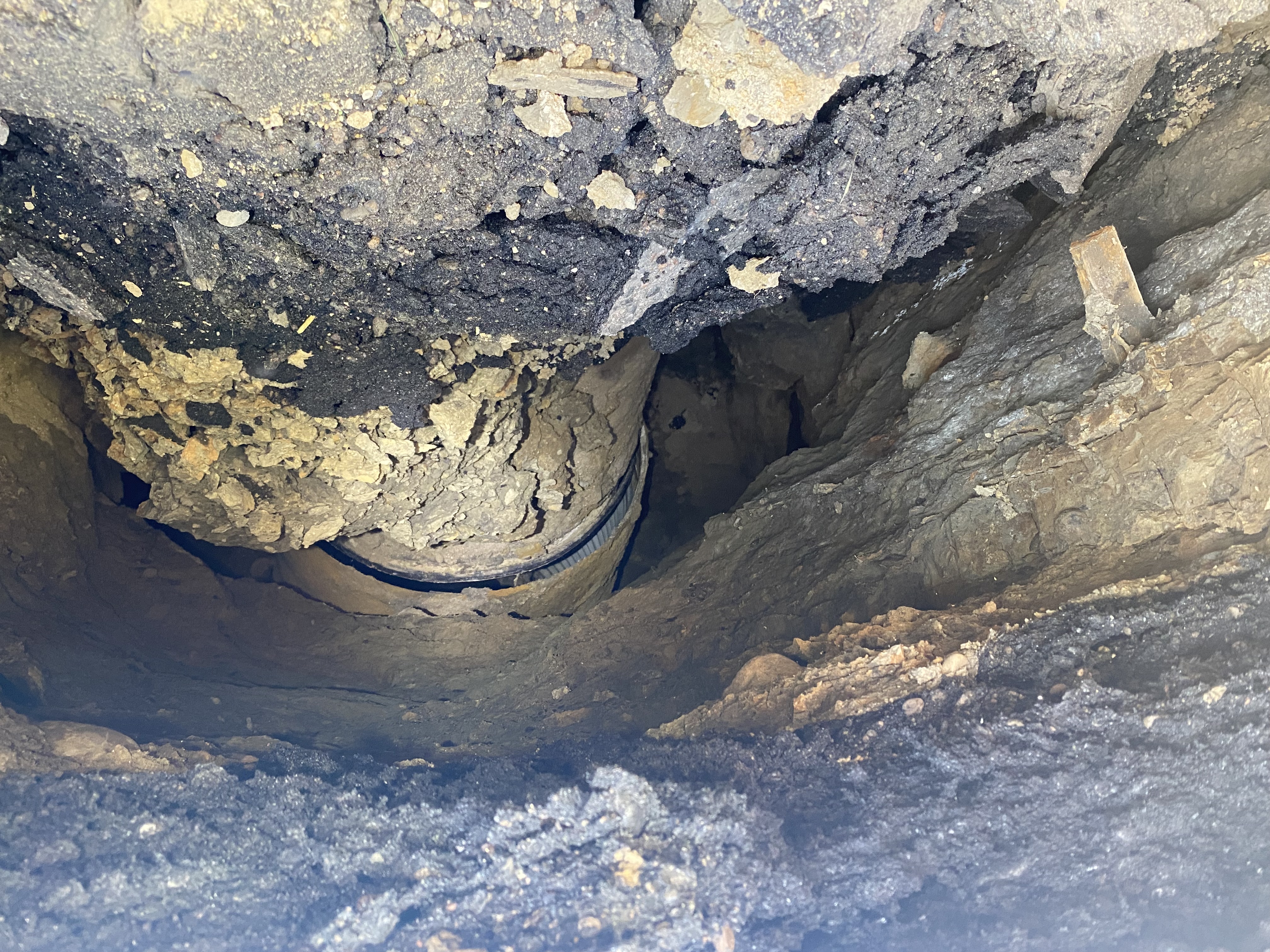
By early afternoon, crews exposed the damaged area and realigned the offset joint. The pipe was stabilized and encased using flow fill, a low-strength concrete mixture that fills voids and sets quickly, providing solid support and preventing further erosion.
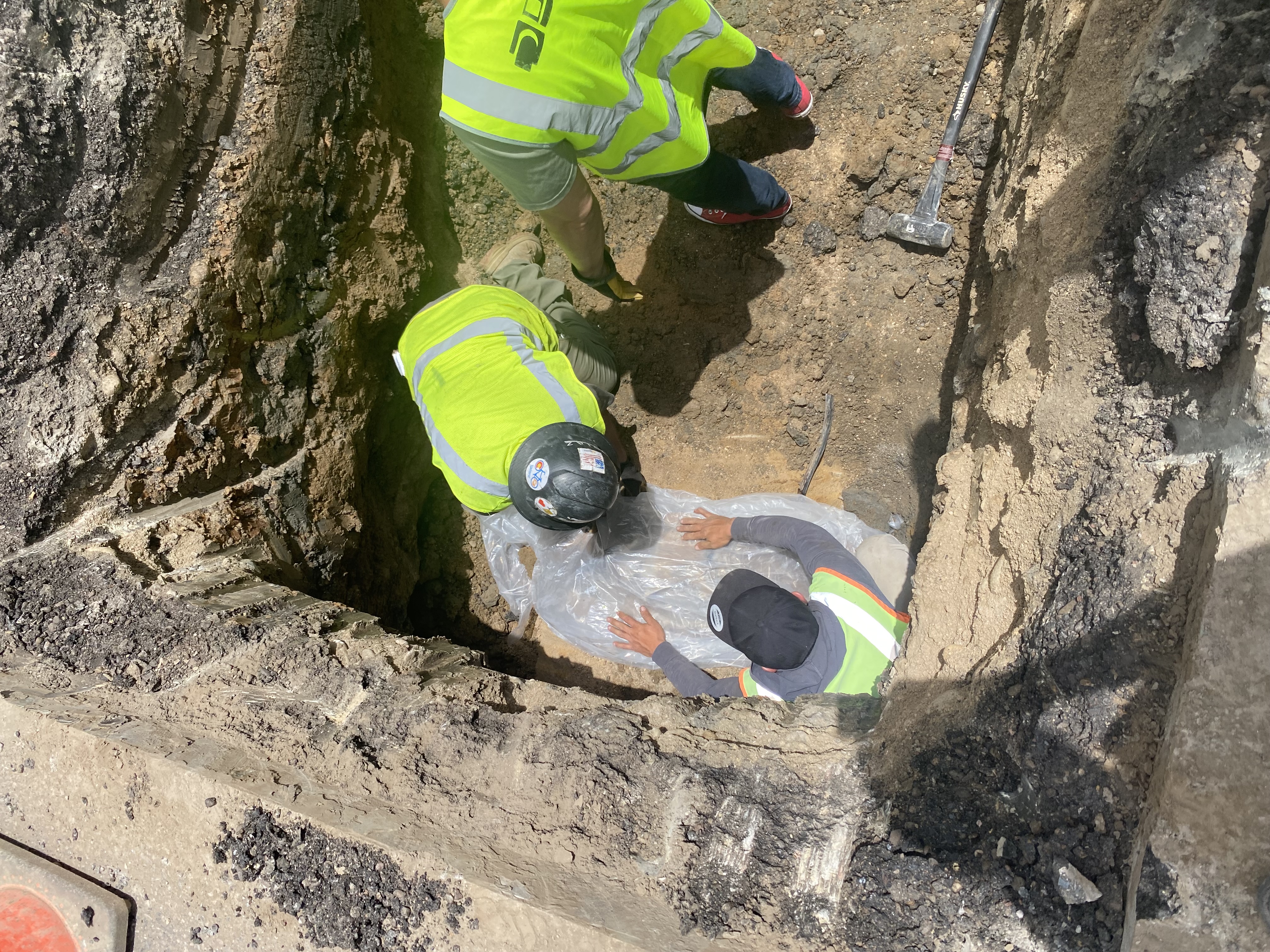 Together, the repairs represent a $27,000 investment to stabilize and protect a key part of Edgewater’s stormwater system.
Currently, Edgewater does not have a dedicated stormwater utility fund. This means emergency drainage work like this must be paid for using the sanitary sewer fund, which also covers wastewater treatment and system maintenance. While this approach ensures that urgent repairs can be made, it highlights the financial strain on existing utility budgets and the importance of long-term planning so stormwater repairs do not continue pulling from sanitary sewer funds.
Why These Fixes Matter
Stormwater pipes like this one are often decades old. Over time, joints can shift or seals wear down, allowing slow leaks that erode soil and eventually cause sinkholes or pavement failures.
Routine inspections and continued reinvestment help prevent these failures before they reach the surface and ensure that emergency responses remain the exception, not the rule.
The chart below shows the different types of storm sewer pipes in Edgewater and how much of each type is in the ground. It also lists the estimated cost to replace each material when it reaches the end of its useful life. Most of Edgewater’s storm sewer system is reinforced concrete pipe (RCP) and cured-in-place pipe (CIPP), and the engineering assessment shows that the majority of this system will not reach its replacement window until around 2055.
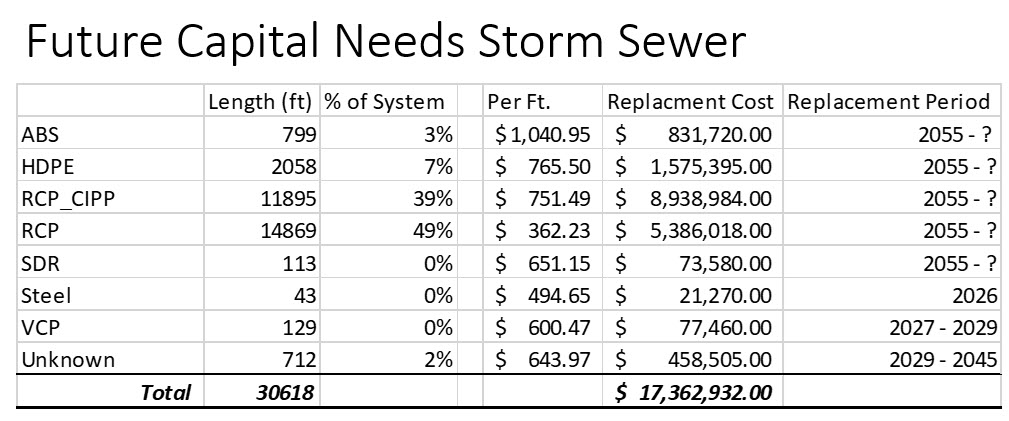
Even with a long timeline, the overall replacement cost for the storm system is significant. Based on today’s estimates, keeping the system healthy over the next thirty years will require steady, long-term investment rather than sudden large increases.
What this means for Edgewater
Spread across Edgewater’s roughly 2,300 households, the long-term cost of replacing the storm system works out to a modest monthly contribution per home, similar to what other Colorado cities charge for their stormwater utilities. Because the largest storm pipe replacements are still decades away, it makes sense to build the fund gradually. In this scenario, the stormwater fee would begin at about $10 per month and then increase slowly each year. A steady annual adjustment in the 5% to 10% range would allow the fund to grow at a manageable pace.
| Period | Annual Investment | Notes |
|---|---|---|
| Years 1–10 | $290,000 per year | Builds the base fund slowly while keeping monthly costs low |
| Years 11–20 | $450,000 per year | Increases support as the fund grows |
| Years 21–30 | $700,000 per year | Reaches the full level needed for 2055 replacement |
This is only one option, and we want to hear what residents think. Please take the survey on this page and join us at the January open house to share your feedback.

Thank you for your contribution!
Help us reach out to more people in the community
Share this with family and friends