

Where your water bill goes & future needs
Every dollar you pay for water supports three essential functions within the system.
Buying water:
Edgewater purchases treated drinking water from Denver Water. This is our largest single expense and reflects the wholesale cost of supplying water to residents.
Running the system:
A portion of each bill pays for the day-to-day operations needed to keep water flowing. This includes reading meters, billing, leak repairs, pipe and hydrant maintenance, customer service, and routine system upkeep.
Planning ahead:
The remaining portion should be set aside for replacing aging pipes, valves, hydrants, and meters before they fail. Many parts of Edgewater’s water system were installed between the 1950s and 1980s and are now reaching the end of their expected service life. Planned replacements limit emergencies and allow work to be coordinated with street resurfacing projects, which reduces disruption for residents.
Understanding the charts:
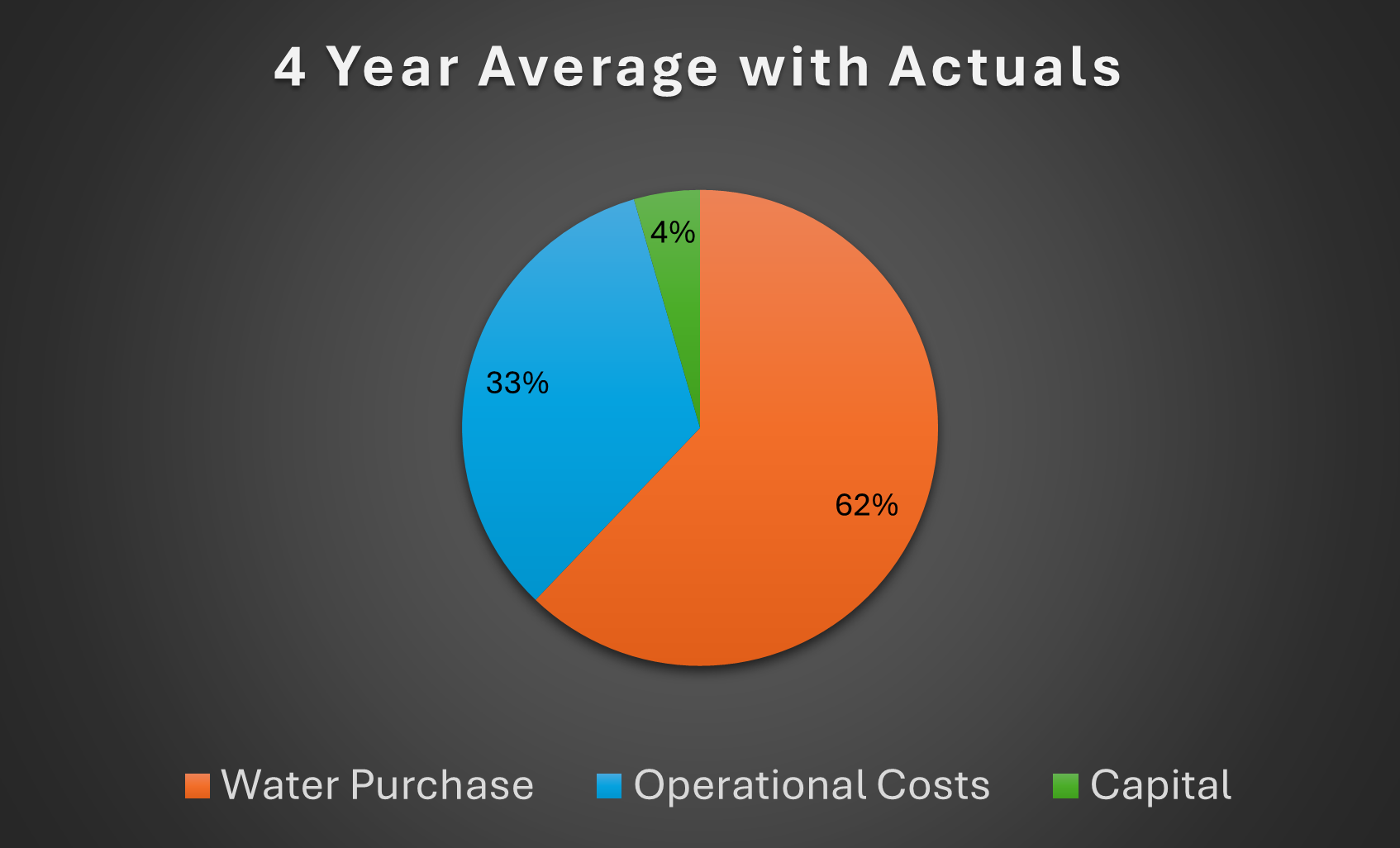
The 4 Year Average charts show how each water bill is divided with water purchases from Denver Water as the largest slice. The Water Utility is only spending about 4% of its budget on capital projects. To replace aging infrastructure, it needs to be 13%.
 |
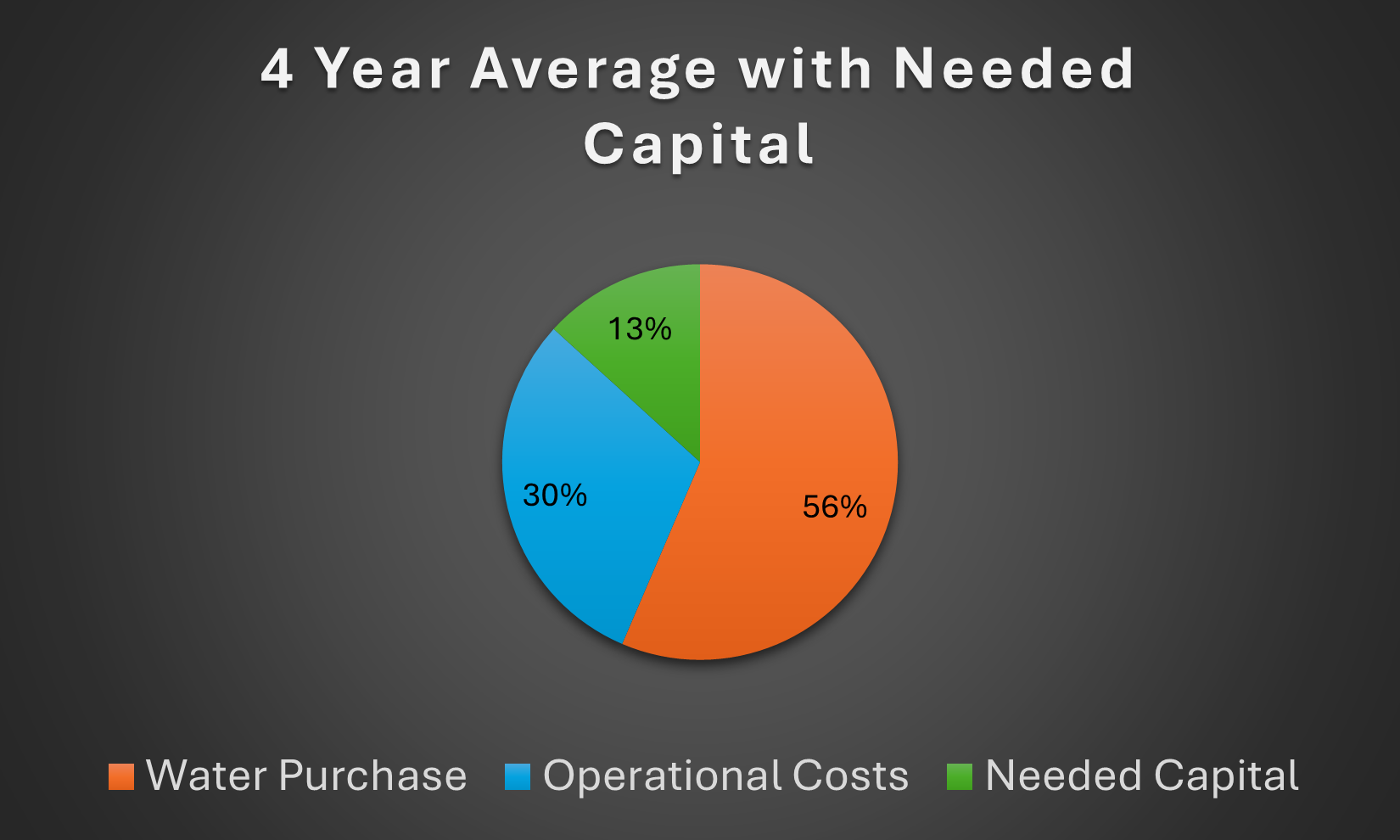 |
| On average, 4% of the water fund, or $76,000, was spent on capital projects such as replacing aging water lines and infrastructure. | Maintaining a healthy system requires investing about 13% of annual revenue, or around $250,000 each year, to replace aging pipes and infrastructure. |
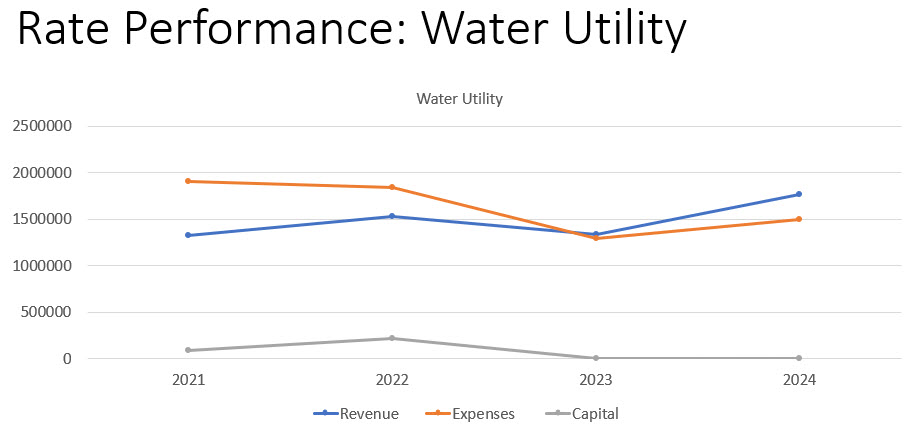 The Rate Performance chart compares the annual revenue to the actual cost of operating the water system. While revenue and expenses remain fairly close, the gray line shows that very little money has been available for capital projects.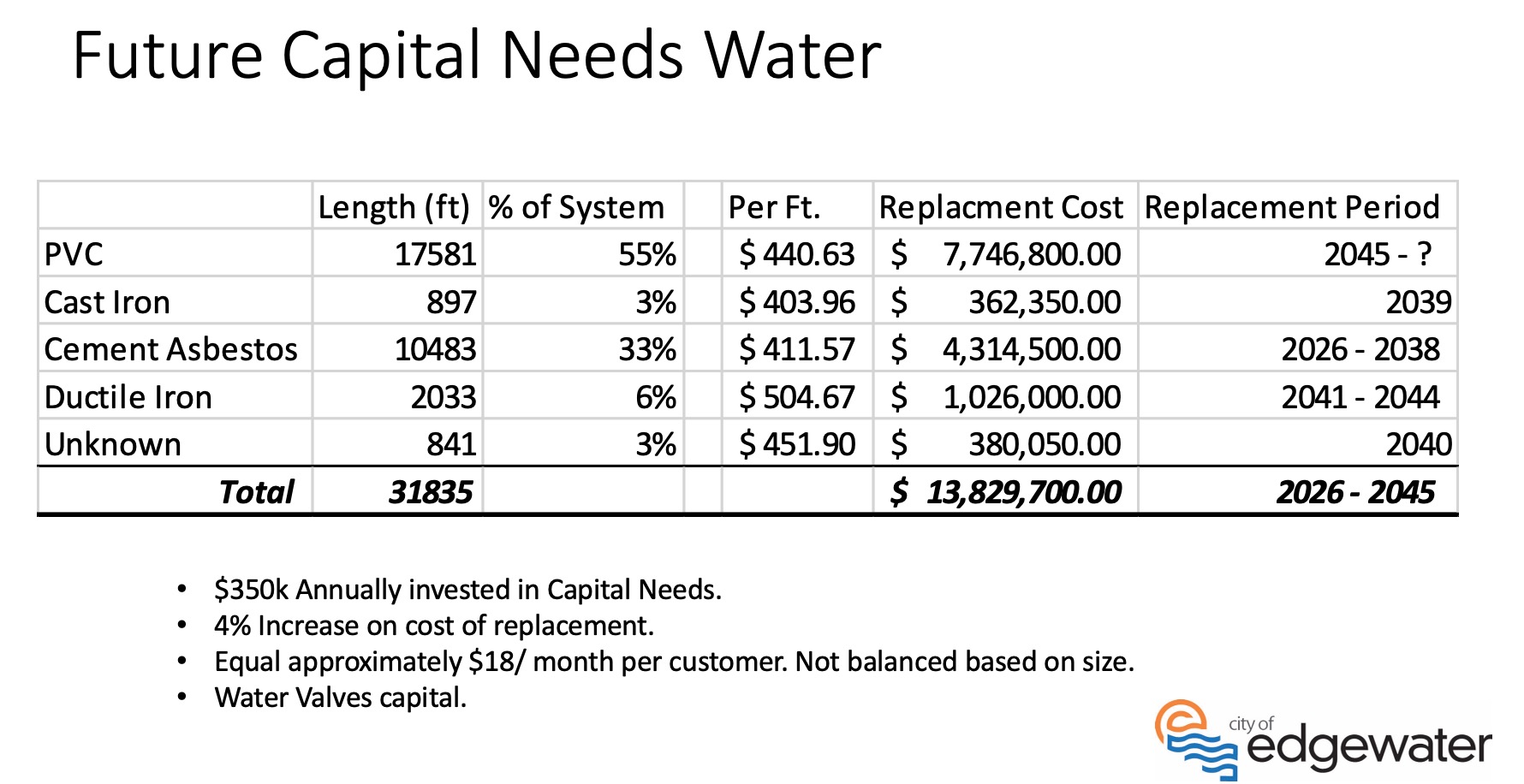
The table above shows the different types of water pipe materials in Edgewater’s system, how many feet of each material we have, and the estimated cost to replace them. Older materials, such as cast iron and asbestos cement, were commonly installed between the 1950s and 1980s and are now reaching the end of their useful life. The total estimated replacement cost for these pipes between 2026 and 2045 is about $13.8 million.
How we got here:
For many years, Edgewater adjusted water rates by tracking Denver Water’s changes to the volume rate and using that to determine rate increases. Since the volume rate is based on how much water customers use, this approach worked until Denver Water began increasing fixed charges significantly. Fixed charges are tied to meter size, which reflects the size of the service line to each home or building. Because Edgewater’s formula did not account for these fixed-charge increases, our rates did not keep up with the true cost of purchasing water even as annual increases continued.
In 2023, the City hired an outside consultant to modernize the rate structure. Their work improved the system, but it was based on limited information about long-term capital needs. At that time, several water-utility expenses were still paid from the General Fund, and the water utility had not yet completed a full engineering review of pipe replacement needs.
Since then, the City and its engineering firm have developed a much clearer picture of long-term capital requirements.
Moving forward:
The City will continue updating rates and long-term planning as better data becomes available. We are asking for community input as we evaluate options to keep the water system financially stable. Please take the survey on this site and attend the open house in January.

Thank you for your contribution!
Help us reach out to more people in the community
Share this with family and friends