Edgewater Utility Funding and Infrastructure Improvements

Share Edgewater Utility Funding and Infrastructure Improvements on Facebook Share Edgewater Utility Funding and Infrastructure Improvements on Twitter Share Edgewater Utility Funding and Infrastructure Improvements on Linkedin Email Edgewater Utility Funding and Infrastructure Improvements link
Water flowing in pipes

From the faucet in your home to the storm drains that protect our streets, Edgewater’s underground systems work quietly every day to deliver clean water and manage storm runoff. Keeping these systems reliable and financially stable is one of the City’s core responsibilities.

The Edgewater Water Utility purchases clean drinking water from Denver Water at a wholesale rate and maintains the pipes, valves, meters, and hydrants that deliver it to your tap. The City also maintains the storm sewer system, which helps reduce flooding and protect our neighborhoods.

In recent years, the Water Fund has not generated enough revenue to cover all system costs. To keep services running, the City temporarily used money from the General Fund, which is supported by sales tax dollars and pays for basic community services. These dollars must be repaid, and the Water Fund needs to return to being fully self-supporting.

Edgewater also does not currently have a dedicated stormwater fee. Some stormwater maintenance has been paid out of the City’s sanitary sewer revenues, which was never intended to be a long-term solution.

Below, you can learn more about the needs in both systems and the options the City is considering to ensure reliable water services in the years ahead.

From the faucet in your home to the storm drains that protect our streets, Edgewater’s underground systems work quietly every day to deliver clean water and manage storm runoff. Keeping these systems reliable and financially stable is one of the City’s core responsibilities.

The Edgewater Water Utility purchases clean drinking water from Denver Water at a wholesale rate and maintains the pipes, valves, meters, and hydrants that deliver it to your tap. The City also maintains the storm sewer system, which helps reduce flooding and protect our neighborhoods.

In recent years, the Water Fund has not generated enough revenue to cover all system costs. To keep services running, the City temporarily used money from the General Fund, which is supported by sales tax dollars and pays for basic community services. These dollars must be repaid, and the Water Fund needs to return to being fully self-supporting.

Edgewater also does not currently have a dedicated stormwater fee. Some stormwater maintenance has been paid out of the City’s sanitary sewer revenues, which was never intended to be a long-term solution.

Below, you can learn more about the needs in both systems and the options the City is considering to ensure reliable water services in the years ahead.

  • Where your water bill goes & future needs

    Share Where your water bill goes & future needs on Facebook Share Where your water bill goes & future needs on Twitter Share Where your water bill goes & future needs on Linkedin Email Where your water bill goes & future needs link

    Every dollar you pay for water supports three essential functions within the system.

    Buying water:
    Edgewater purchases treated drinking water from Denver Water. This is our largest single expense and reflects the wholesale cost of supplying water to residents.

    Running the system:
    A portion of each bill pays for the day-to-day operations needed to keep water flowing. This includes reading meters, billing, leak repairs, pipe and hydrant maintenance, customer service, and routine system upkeep.

    Planning ahead:
    The remaining portion should be set aside for replacing aging pipes, valves, hydrants, and meters before they fail. Many parts of Edgewater’s water system were installed between the 1950s and 1980s and are now reaching the end of their expected service life. Planned replacements limit emergencies and allow work to be coordinated with street resurfacing projects, which reduces disruption for residents.

    Understanding the charts:
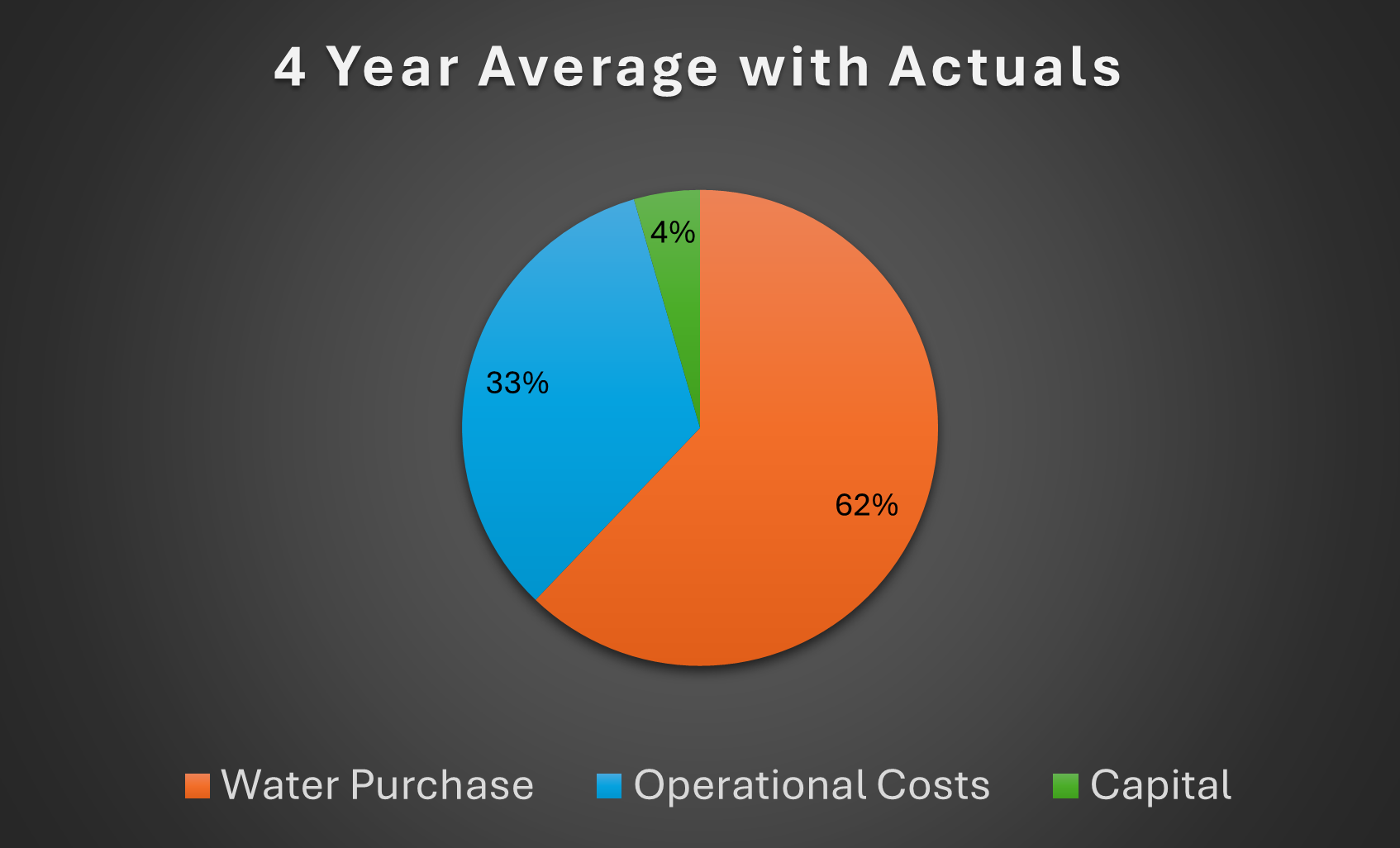
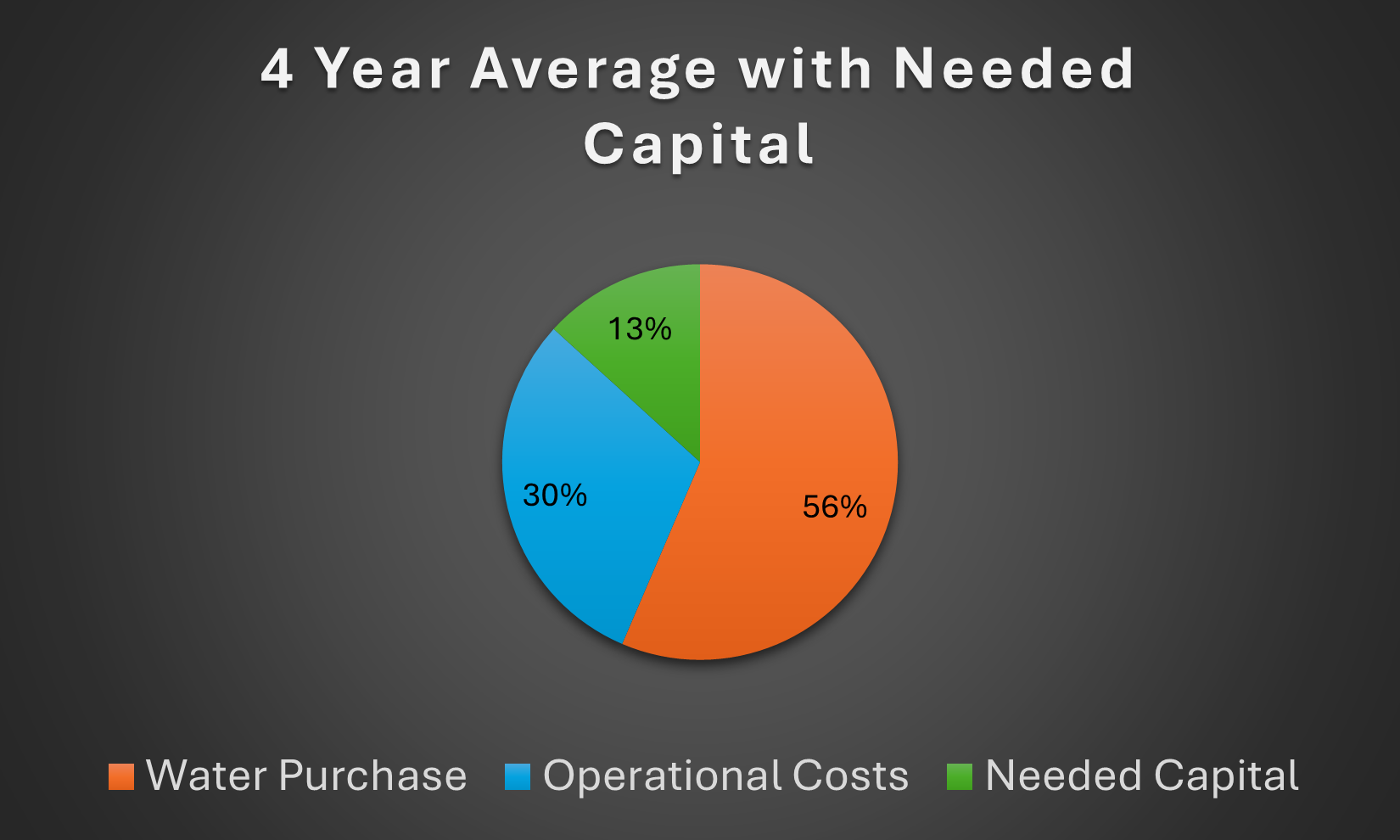
    The 4 Year Average charts show how each water bill is divided with water purchases from Denver Water as the largest slice. The Water Utility is only spending about 4% of its budget on capital projects. To replace aging infrastructure, it needs to be 13%.

    On average, 4% of the water fund, or $76,000, was spent on capital projects such as replacing aging water lines and infrastructure. Maintaining a healthy system requires investing about 13% of annual revenue, or around $250,000 each year, to replace aging pipes and infrastructure.


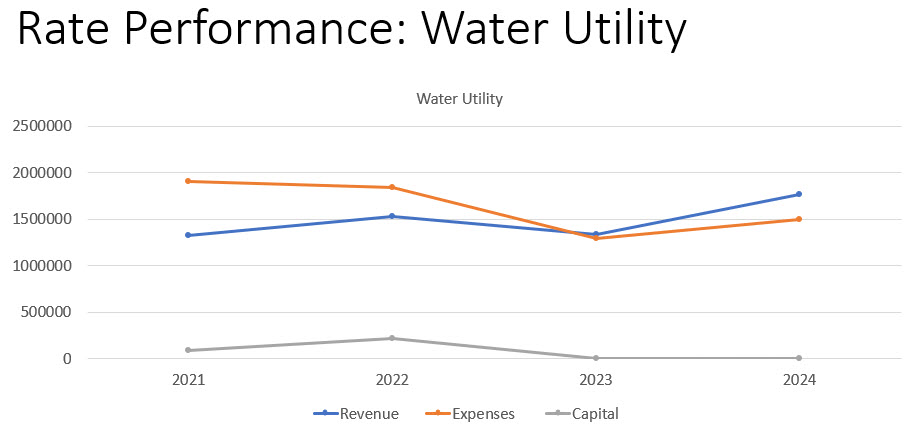
    The Rate Performance chart compares the annual revenue to the actual cost of operating the water system. While revenue and expenses remain fairly close, the gray line shows that very little money has been available for capital projects.

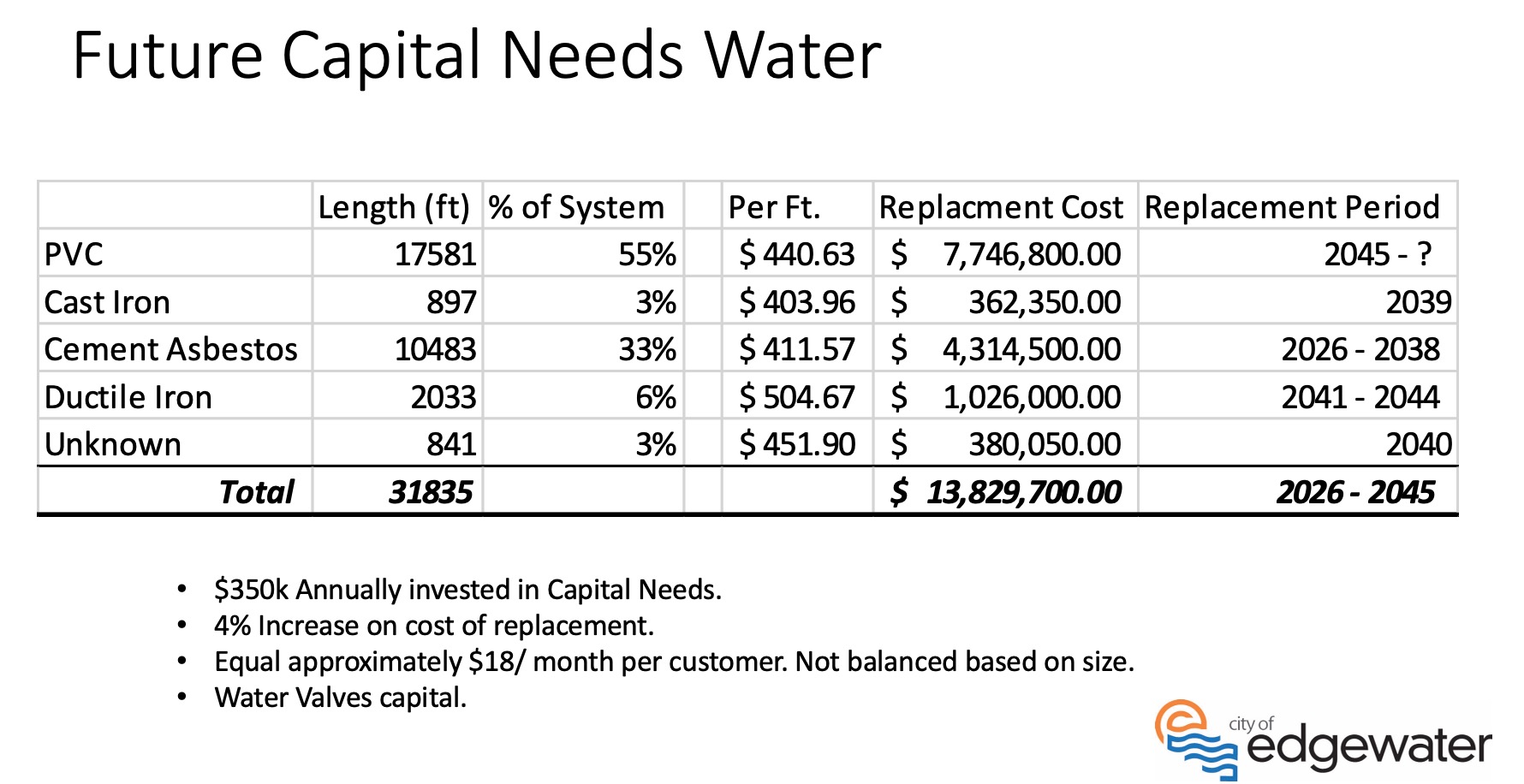
    The table above shows the different types of water pipe materials in Edgewater’s system, how many feet of each material we have, and the estimated cost to replace them. Older materials, such as cast iron and asbestos cement, were commonly installed between the 1950s and 1980s and are now reaching the end of their useful life. The total estimated replacement cost for these pipes between 2026 and 2045 is about $13.8 million.

    How we got here:
    For many years, Edgewater adjusted water rates by tracking Denver Water’s changes to the volume rate and using that to determine rate increases. Since the volume rate is based on how much water customers use, this approach worked until Denver Water began increasing fixed charges significantly. Fixed charges are tied to meter size, which reflects the size of the service line to each home or building. Because Edgewater’s formula did not account for these fixed-charge increases, our rates did not keep up with the true cost of purchasing water even as annual increases continued.

    In 2023, the City hired an outside consultant to modernize the rate structure. Their work improved the system, but it was based on limited information about long-term capital needs. At that time, several water-utility expenses were still paid from the General Fund, and the water utility had not yet completed a full engineering review of pipe replacement needs.

    Since then, the City and its engineering firm have developed a much clearer picture of long-term capital requirements.

    Moving forward:
    The City will continue updating rates and long-term planning as better data becomes available. We are asking for community input as we evaluate options to keep the water system financially stable. Please take the survey on this site and attend the open house in January.

  • H₂‑Oh No! Pipe Nightmare on Eaton Street

    Share H₂‑Oh No! Pipe Nightmare on Eaton Street on Facebook Share H₂‑Oh No! Pipe Nightmare on Eaton Street on Twitter Share H₂‑Oh No! Pipe Nightmare on Eaton Street on Linkedin Email H₂‑Oh No! Pipe Nightmare on Eaton Street link

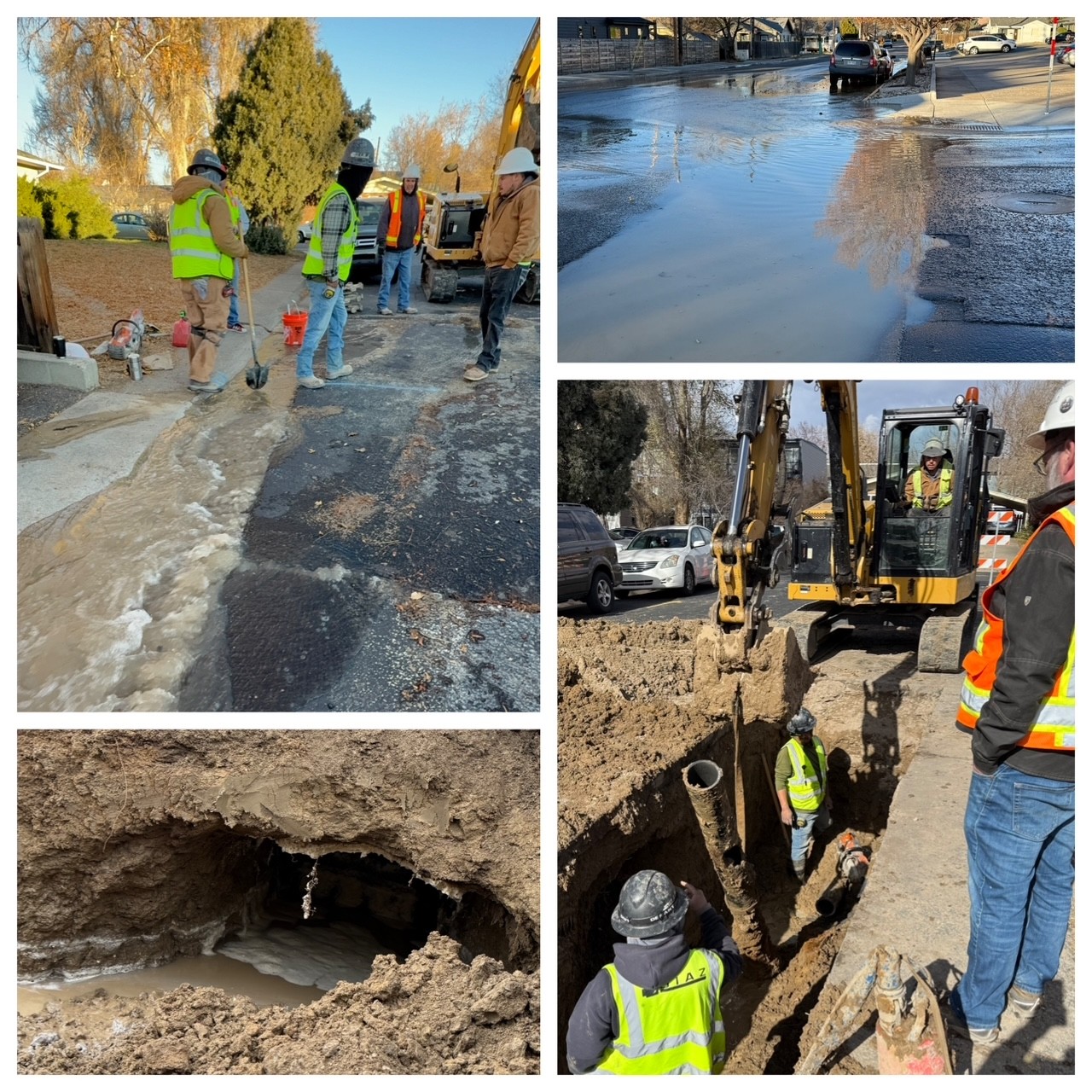
    Late in the evening on November 17, 2025, staff discovered a leak along Eaton Street. Because it wasn’t causing road damage and wasn’t threatening property, the team decided to let the line run overnight. The goal was simple: avoid shutting off water to dozens of apartments during the evening when families were home and relying on it.

    By early Monday morning, the situation had changed. The leak had grown, water was now flowing across the pavement, and the pressure loss meant residents were already feeling the effects. To safely make repairs and prevent further damage, the water had to be turned off.

    Below is a look at what happened under the street, why this became an emergency, and how the repair was completed.
    What We Found Under Eaton Street
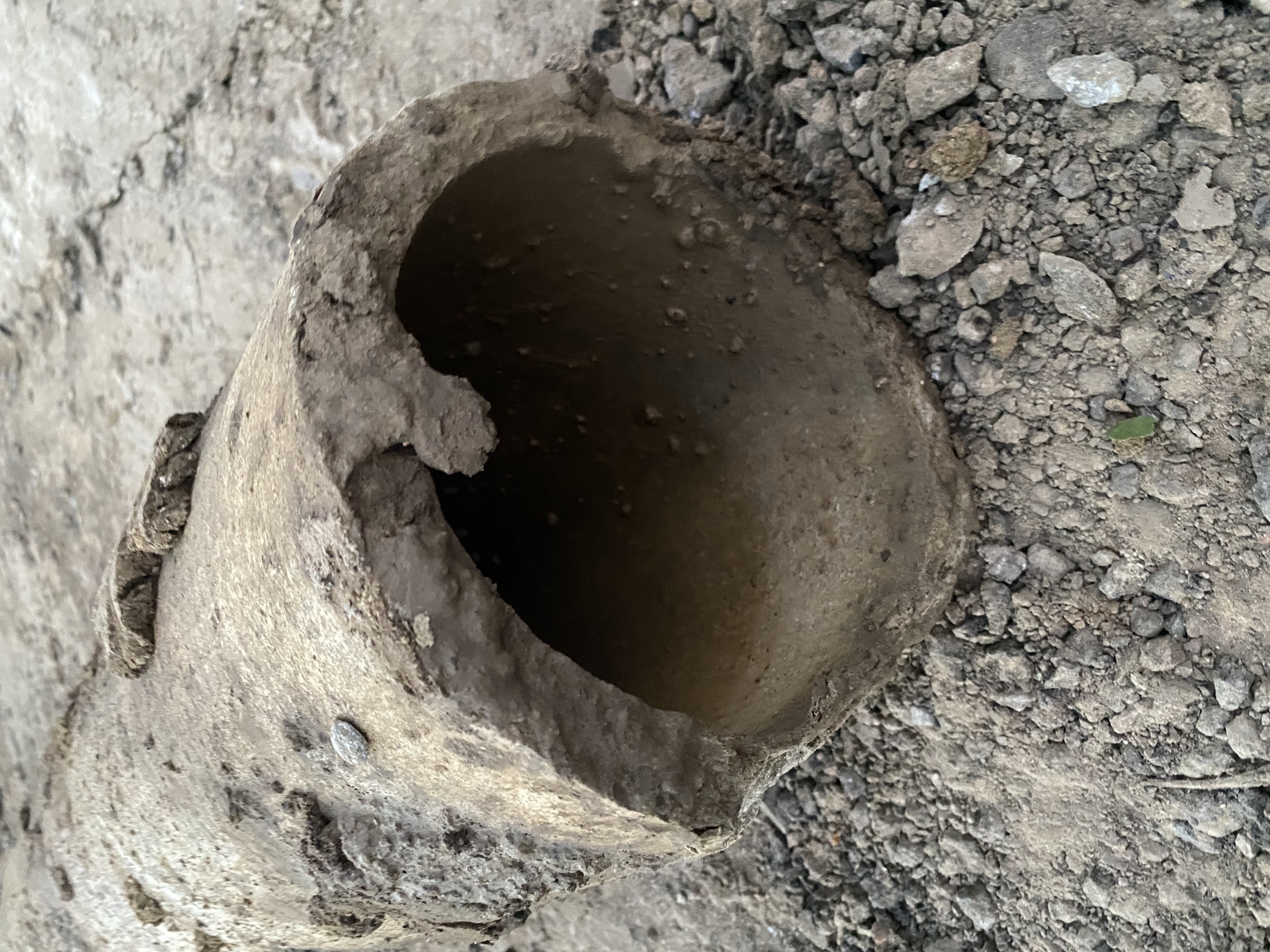
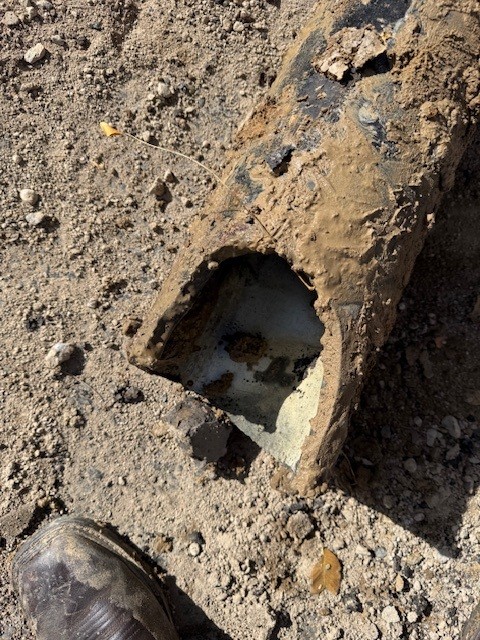
    Once the pavement was removed, the crew uncovered a ruptured section of pipe sitting near a large underground cavity. Water had washed out the soil nearby, creating a hollow void.


    Why Emergency Repairs Feel So Chaotic
    If this had been a scheduled replacement, we could have picked a time that avoided morning routines, showers, breakfast, school prep, and getting ready for work. Residents would have received advance notice and detours could have been set up early.

    Emergency repairs don’t offer that flexibility. Once the leak expanded, valves had to be shut immediately and the water outage happened on the spot. The street also had to be closed to through traffic for the safety of crews and drivers.


    This is exactly why this type of break causes so much disruption. Even with good intentions the night before, the break escalated faster than expected and became a full emergency by sunrise.

    How the Repair Was Made
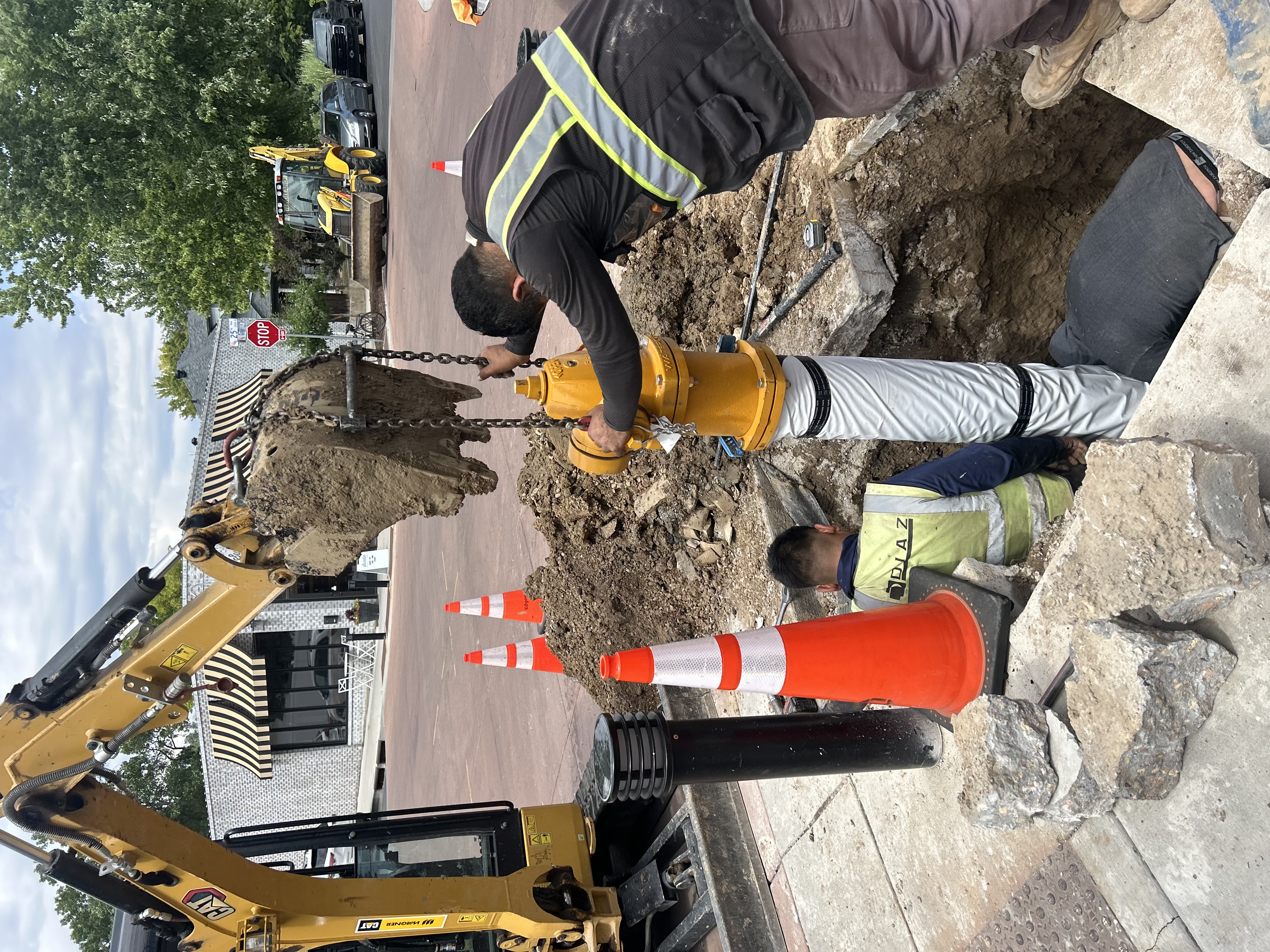
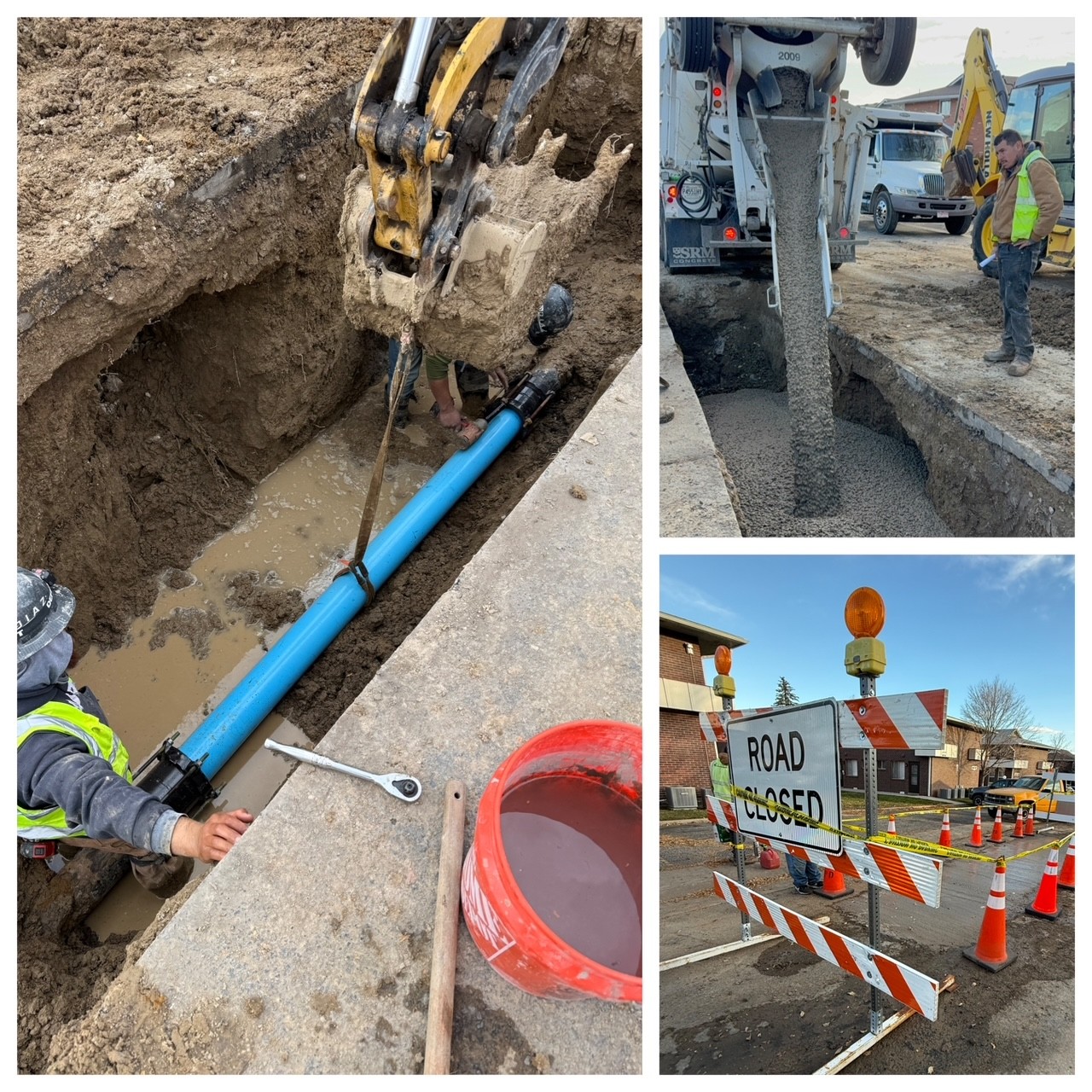
    After shutting down service to the apartments and nearby homes, crews excavated to expose the failed section. The damaged pipe was removed, a new section of pipe was installed, and the line was carefully brought back into service.

    Because the break created such a large void, the trench needed structural support. Flow fill was chosen to stabilize the area because it fills irregular spaces more effectively than standard backfill materials.
    Restoring the Road and What Comes Next

    Once the broken section of water main was replaced, the trench was backfilled, compacted and stabilized so the street could reopen safely. Permanent paving will be completed as the weather allows.

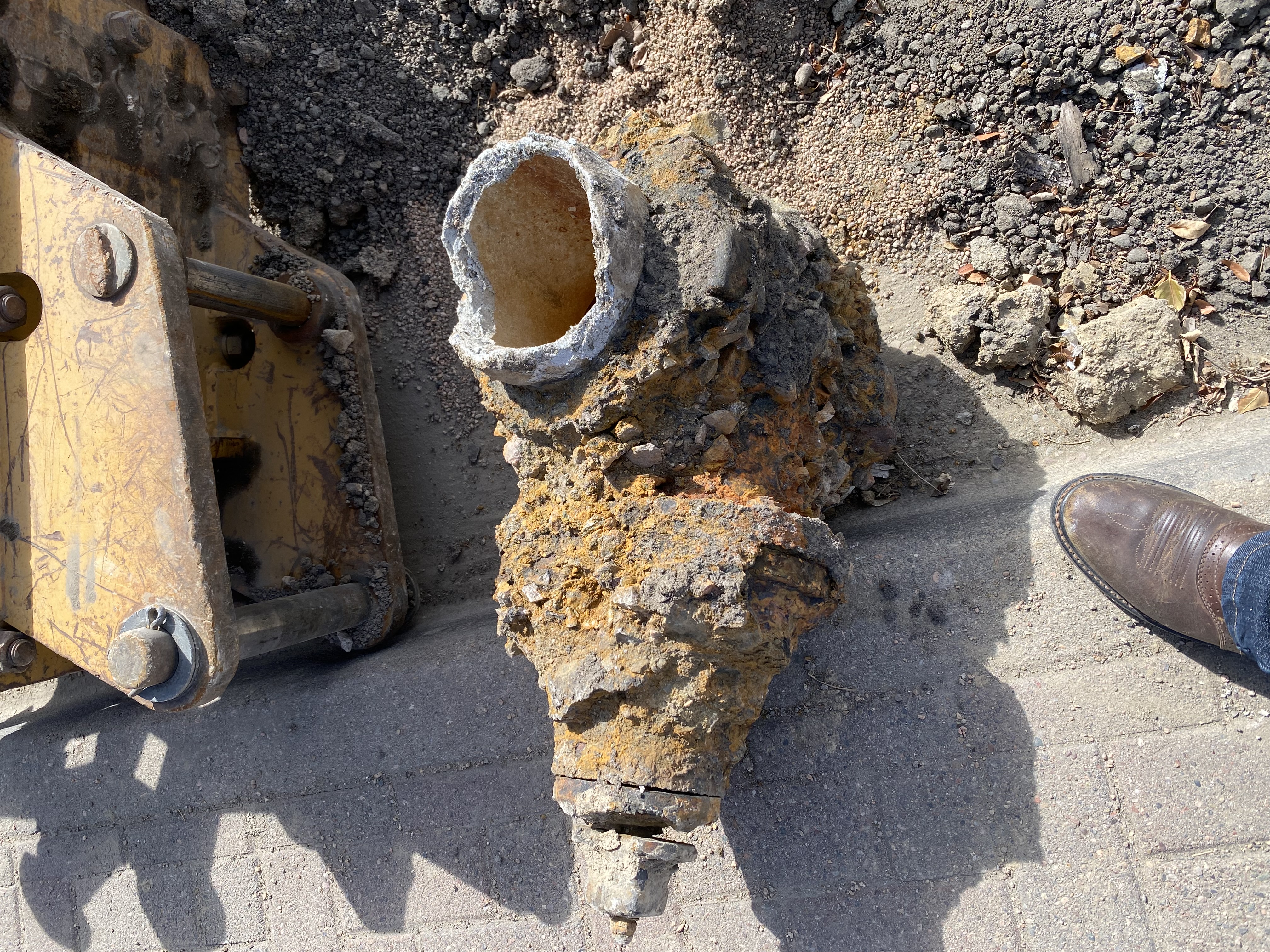
    Although this repair is complete, it serves as another reminder that sections of older cast-iron pipe are nearing the end of their useful life. Cast iron is no longer used in new systems because it becomes brittle with age. Replacing these lines through planned capital projects reduces the number of emergencies we see, shortens outages and keeps streets from being disrupted multiple times for unplanned digs.

    Thank You, Residents!

    We know this outage happened at one of the busiest times of day and appreciate the patience shown by the residents of Eaton Street. Emergency repairs cannot be scheduled around people’s routines and they take as long as the excavation and replacement require. In this case, water had to be off for about 7.5 hours, and the street was closed to through traffic while crews worked to expose the pipe, remove the failed section, install new PVC, and stabilize the trench.

    With planned replacements, a new pipe can be installed next to the old one, so outages are much shorter (a few hours or less) and scheduled outside the busiest times of the day. That is one of the benefits of capital investment in our water system.
    You need to be signed in to add your comment.

  • When the Road Sinks: Why Edgewater Is Considering a Stormwater Fee

    Share When the Road Sinks: Why Edgewater Is Considering a Stormwater Fee on Facebook Share When the Road Sinks: Why Edgewater Is Considering a Stormwater Fee on Twitter Share When the Road Sinks: Why Edgewater Is Considering a Stormwater Fee on Linkedin Email When the Road Sinks: Why Edgewater Is Considering a Stormwater Fee link
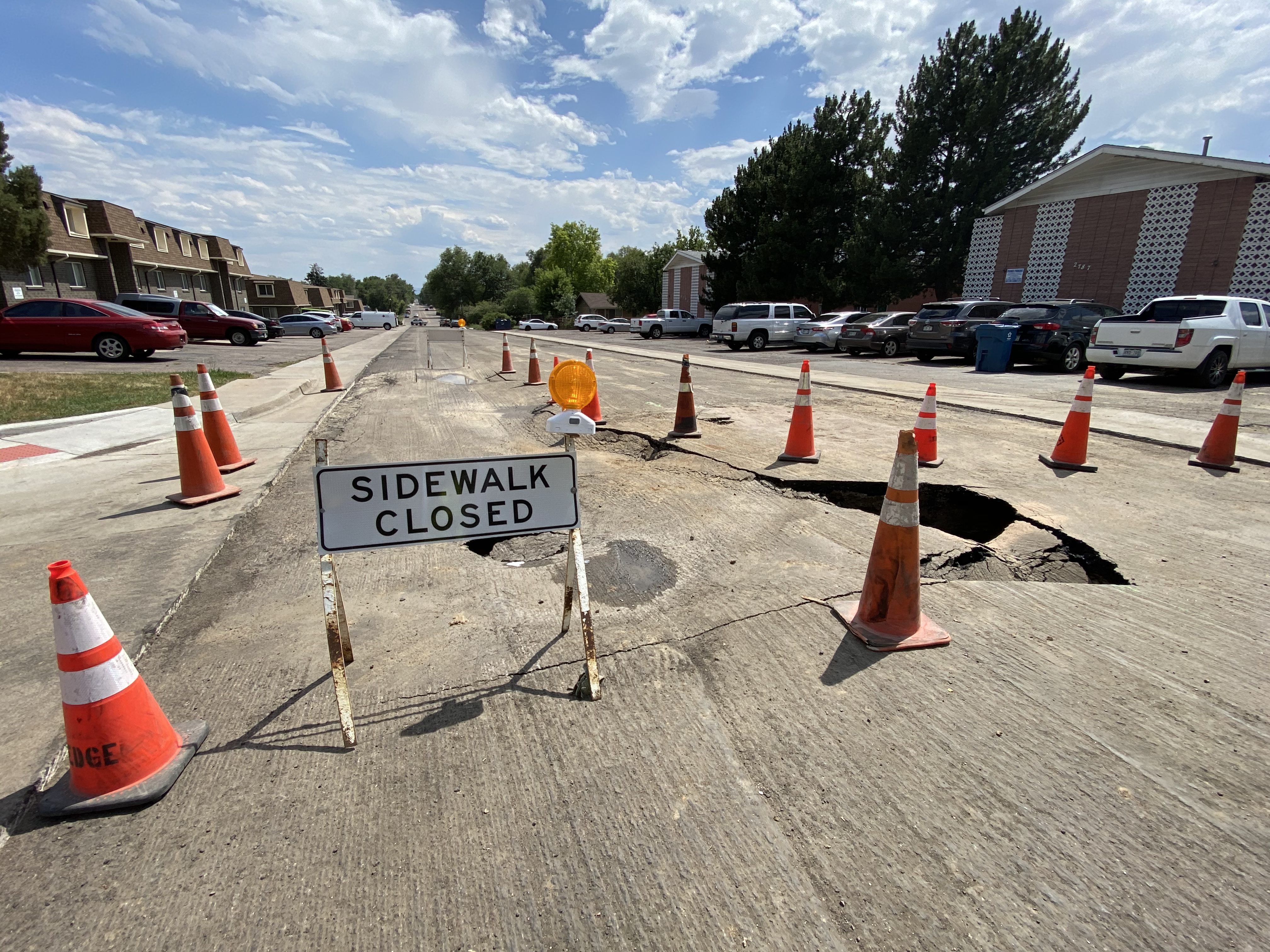
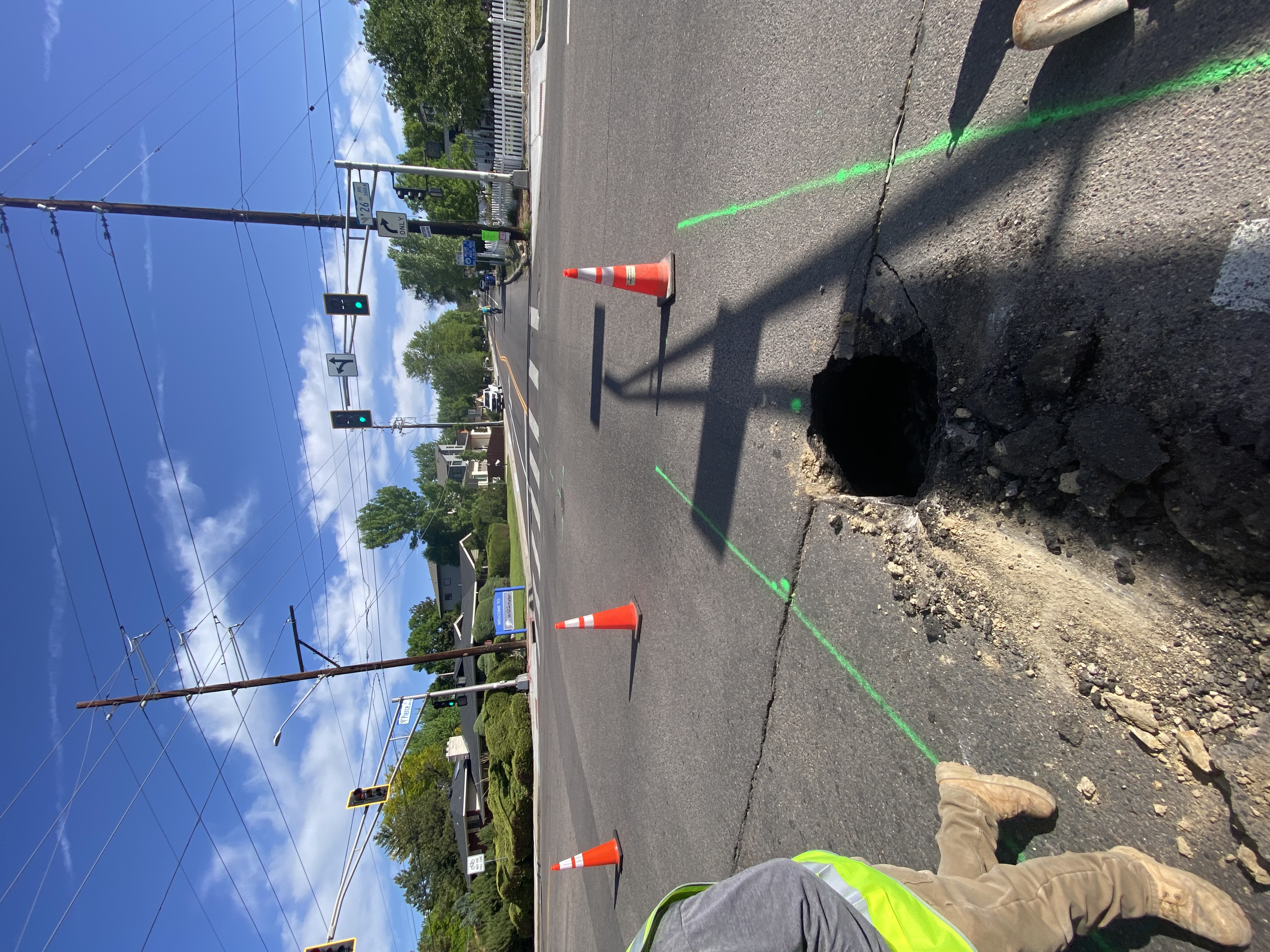
    Just before a long Memorial Day weekend, Edgewater Public Works crews were called to investigate a report of a soft spot forming in the roadway at W. 26th Avenue and Pierce Street. By 9 a.m., staff confirmed that part of the asphalt had begun to sink, creating a hole at the surface. The area was immediately barricaded for safety, and Edgewater’s contractor was called.
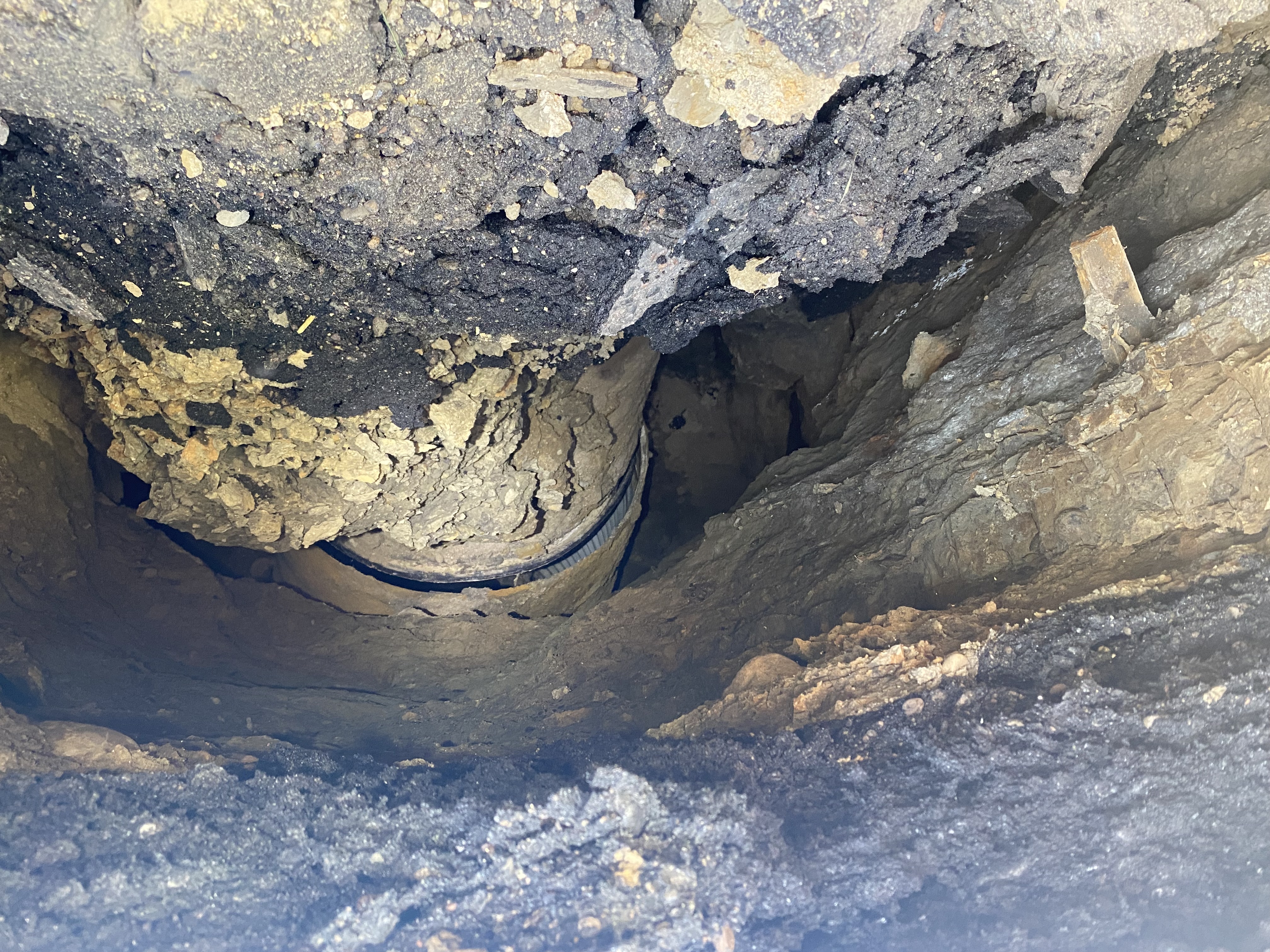
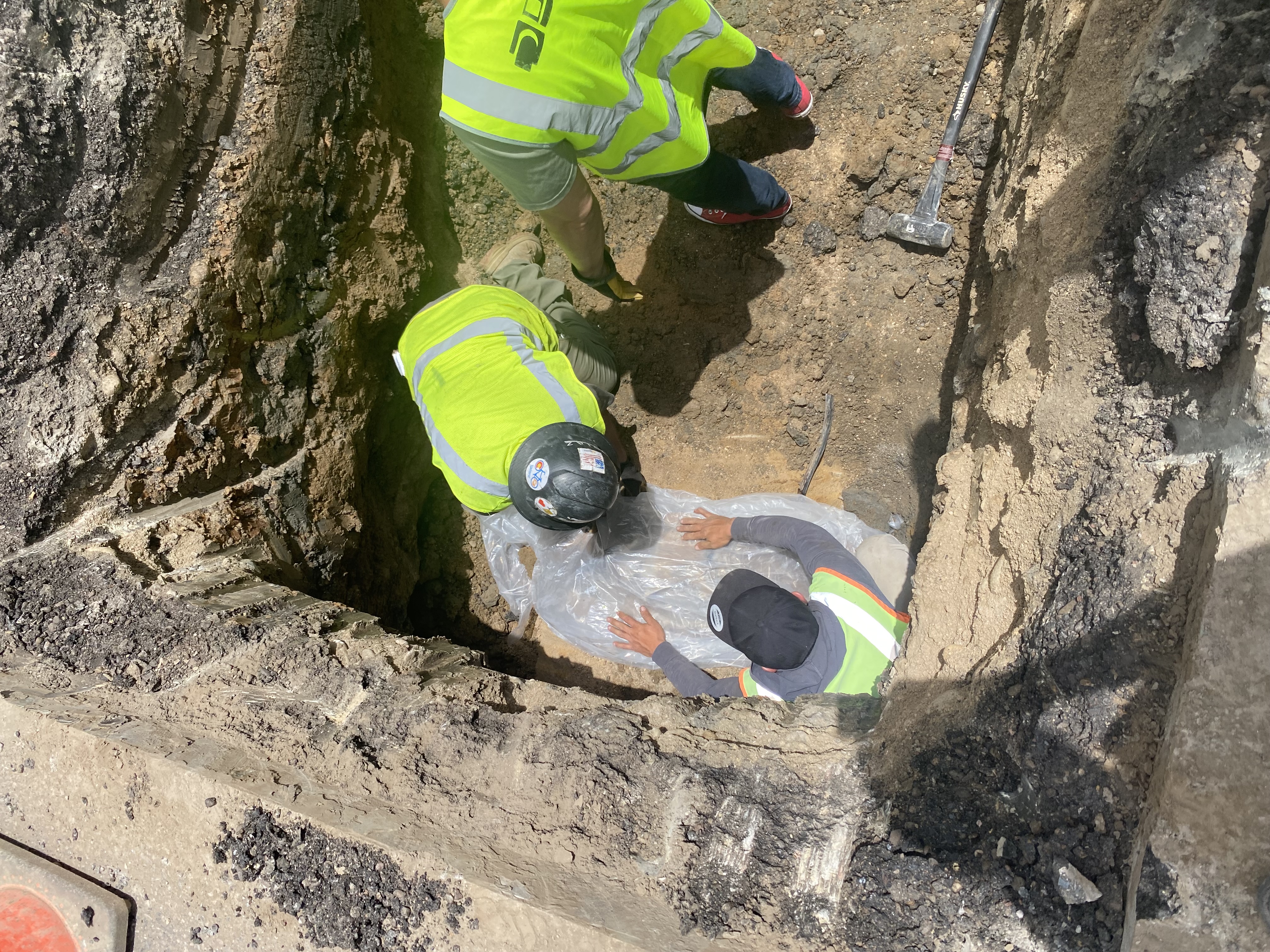

    After confirming all utilities were marked and that no water or gas lines were in the area, excavation began around noon. What they found was a 48-inch storm sewer pipe that had separated at a joint several feet below the surface. Over time, small amounts of water had leaked through the gap, washing away soil and weakening the ground above until the pavement finally gave way.

    By early afternoon, crews exposed the damaged area and realigned the offset joint. The pipe was stabilized and encased using flow fill, a low-strength concrete mixture that fills voids and sets quickly, providing solid support and preventing further erosion.

    Together, the repairs represent a $27,000 investment to stabilize and protect a key part of Edgewater’s stormwater system.
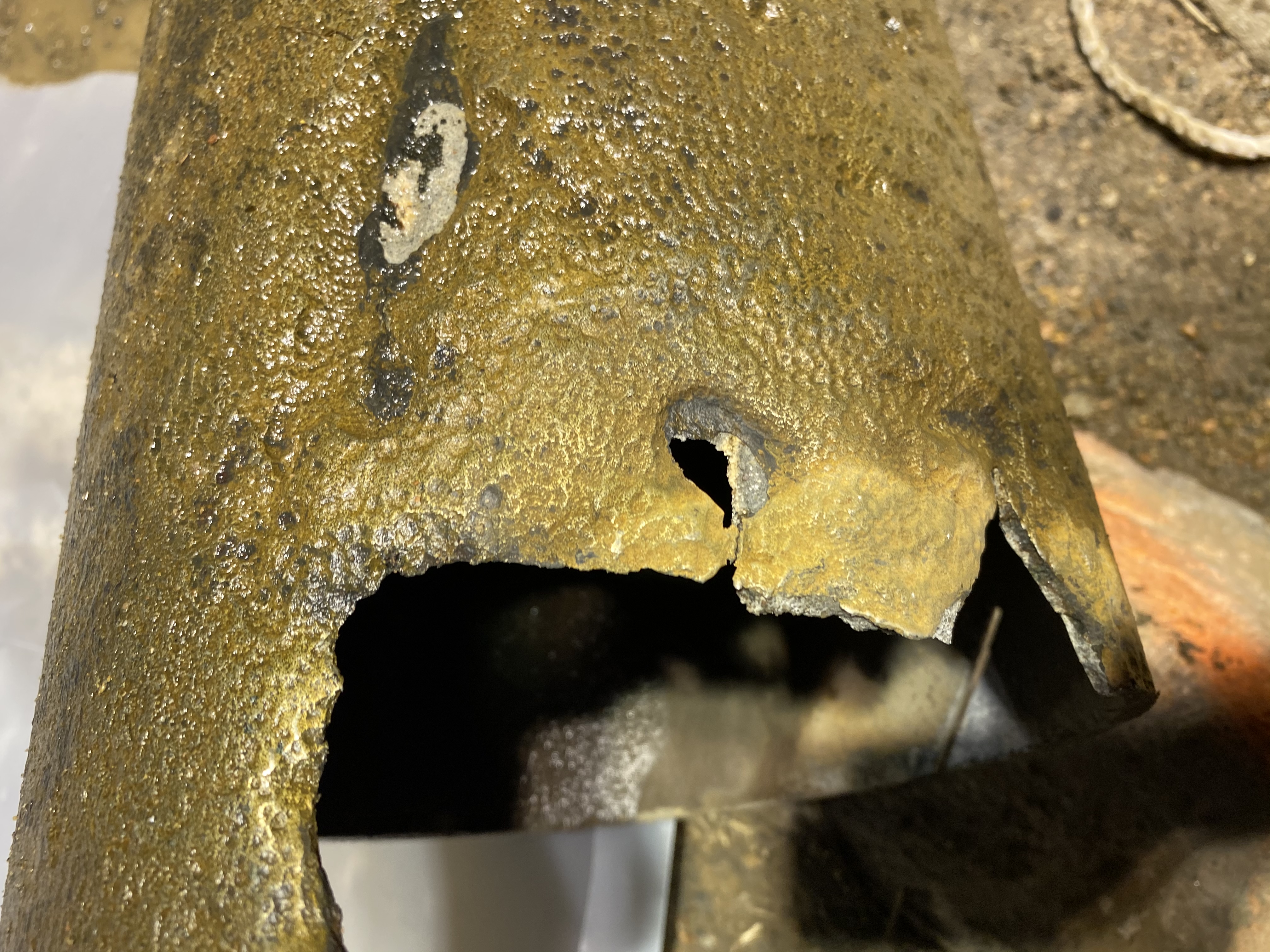
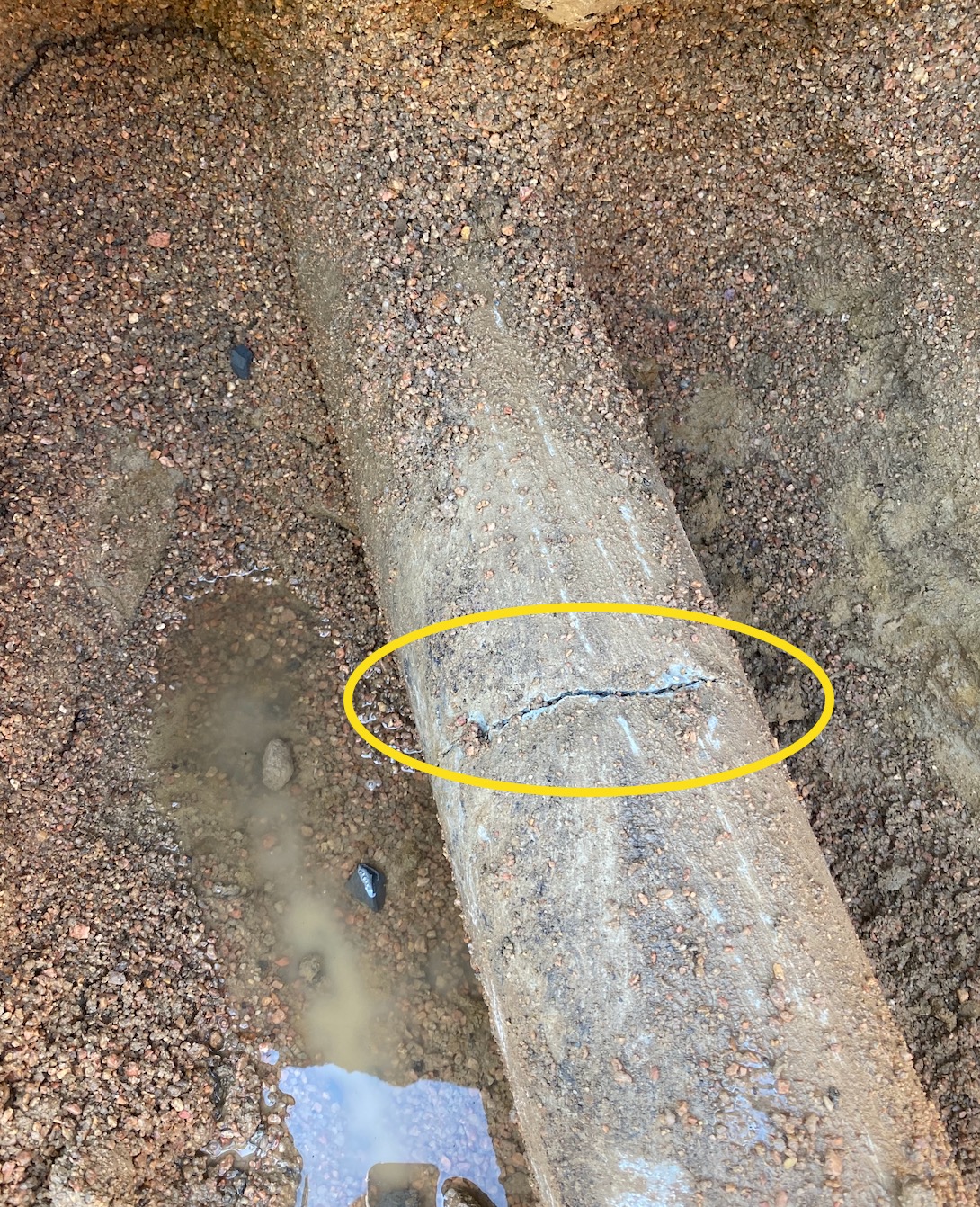
    Currently, Edgewater does not have a dedicated stormwater utility fund. This means emergency drainage work like this must be paid for using the sanitary sewer fund, which also covers wastewater treatment and system maintenance. While this approach ensures that urgent repairs can be made, it highlights the financial strain on existing utility budgets and the importance of long-term planning so stormwater repairs do not continue pulling from sanitary sewer funds.


    Why These Fixes Matter

    Stormwater pipes like this one are often decades old. Over time, joints can shift or seals wear down, allowing slow leaks that erode soil and eventually cause sinkholes or pavement failures.

    Routine inspections and continued reinvestment help prevent these failures before they reach the surface and ensure that emergency responses remain the exception, not the rule.


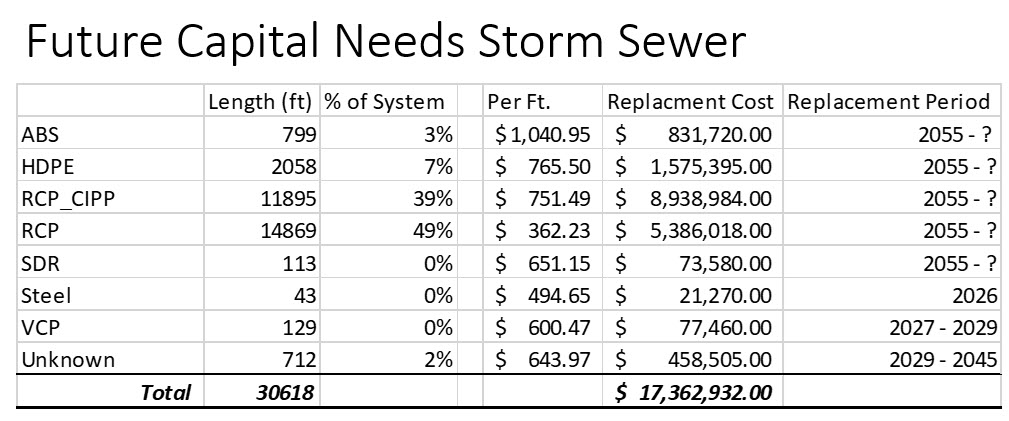
    The chart below shows the different types of storm sewer pipes in Edgewater and how much of each type is in the ground. It also lists the estimated cost to replace each material when it reaches the end of its useful life. Most of Edgewater’s storm sewer system is reinforced concrete pipe (RCP) and cured-in-place pipe (CIPP), and the engineering assessment shows that the majority of this system will not reach its replacement window until around 2055.


    Even with a long timeline, the overall replacement cost for the storm system is significant. Based on today’s estimates, keeping the system healthy over the next thirty years will require steady, long-term investment rather than sudden large increases.

    What this means for Edgewater

    Spread across Edgewater’s roughly 2,300 households, the long-term cost of replacing the storm system works out to a modest monthly contribution per home, similar to what other Colorado cities charge for their stormwater utilities. Because the largest storm pipe replacements are still decades away, it makes sense to build the fund gradually. In this scenario, the stormwater fee would begin at about $10 per month and then increase slowly each year. A steady annual adjustment in the 5% to 10% range would allow the fund to grow at a manageable pace.

    Period Annual Investment Notes
    Years 1–10 $290,000 per year Builds the base fund slowly while keeping monthly costs low
    Years 11–20 $450,000 per year Increases support as the fund grows
    Years 21–30 $700,000 per year Reaches the full level needed for 2055 replacement


    This is only one option, and we want to hear what residents think. Please take the survey on this page and join us at the January open house to share your feedback.

    You need to be signed in to add your comment.

  • What’s Beneath Our Streets: Ductile Iron and CA Pipes

    Share What’s Beneath Our Streets: Ductile Iron and CA Pipes on Facebook Share What’s Beneath Our Streets: Ductile Iron and CA Pipes on Twitter Share What’s Beneath Our Streets: Ductile Iron and CA Pipes on Linkedin Email What’s Beneath Our Streets: Ductile Iron and CA Pipes link

    For decades, Edgewater’s underground water system was built using materials that were considered state-of-the-art for their time: ductile iron and cement-asbestos (CA) pipe.

    Ductile iron came into use around the 1950s as a tougher, more flexible version of cast iron. It’s strong and can handle pressure, but over time it still suffers from corrosion, joint failures, and mineral buildup, especially where soil conditions are aggressive or protective coatings have worn away. It is estimated that Edgewater has about half a mile of iron pipe that will cost $1.39 million to replace.

    Cement-Asbestos (CA) pipe was installed from the 1940s through the 1970s because it was lightweight, smooth inside, and thought to be nearly maintenance-free. While the asbestos fibers are safely bound within the cement and pose no risk when the pipe remains intact, CA pipe becomes fragile with age. As it nears the end of its life, often 70 years, it can crack, leak, or crumble during repairs, making emergency fixes more challenging. There is about 2 miles of CA pipe in Edgewater, and the estimated cost to replace it all is $4.3 million.

    Today, Edgewater has replaced some lines with PVC and HDPE (plastic-based) pipe, which resist corrosion, are easier to repair, and have longer service lives. However, much of the system still relies on the older pipes, valves, hydrants, and fittings that are well beyond their intended lifespan. Replacing these aging components is just as important as replacing the pipes themselves, since they allow crews to isolate breaks, restore service faster, and reduce the number of homes and businesses affected during emergency repairs.


Page last updated: 22 Nov 2025, 02:35 PM